


Page 21 - IJOCTA-15-4
P. 21
Control strategies and power converter topologies for switched reluctance motors in electric...


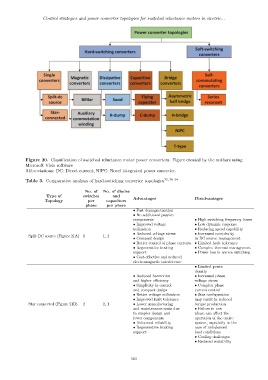
            Figure 20. Classification of switched reluctance motor power converters. Figure created by the authors using
            Microsoft Visio software
            Abbreviations: DC: Direct current; NIPC: Novel integrated power converter.

            Table 3. Comparative analysis of hard-switching converter topologies 75,78–94
                                       No. of  No. of diodes
                      Type of         switches     and
                     Topology           per     capacitors  Advantages                  Disadvantages
                                       phase    per phase
                                                            • Fast demagnetization
                                                            • No additional passive
                                                            components                  • High switching frequency losses
                                                            • Improved voltage          • Low dynamic response
                                                            utilization                 • Reducing speed capability
                                                            • Reduced voltage stress    • Increased complexity
              Split DC source (Figure 21A) 1   1, 2
                                                            • Compact design            in DC source management
                                                            • Better control of phase currents • Limited fault tolerance
                                                            • Regenerative braking      • Complex thermal management
                                                            support                     • Power loss in source switching
                                                            • Cost-effective and reduced
                                                            electromagnetic interference
                                                                                        • Limited power
                                                                                        density
                                                            • Reduced harmonics         • Increased phase
                                                            and higher efficiency       voltage stress
                                                            • Simplicity in control     • Complex phase
                                                            and compact design          current control
                                                            • Better voltage utilization  • Star configuration
                                                            • Improved fault tolerance  may result in reduced
              Star connected (Figure 21B)  2   2, 1         • Lower manufacturing       torque production
                                                            and maintenance costs due   • Failure in one
                                                            to simpler design and       phase can affect the
                                                            fewer components            operation of the entire
                                                            • Enhanced reliability      system, especially in the
                                                            • Regenerative braking      case of unbalanced
                                                            support                     load conditions
                                                                                        • Cooling challenges
                                                                                        • Reduced scalability


                                                           563

