


Page 16 - IJOCTA-15-4
P. 16
M. A. Aman et al. / IJOCTA, Vol.15, No.4, pp.549-577 (2025)


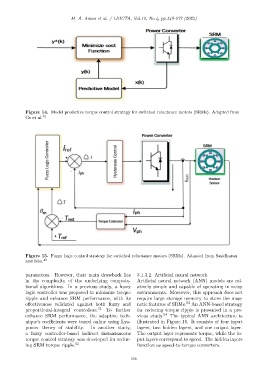
            Figure 14. Model predictive torque control strategy for switched reluctance motors (SRMs). Adapted from
            Ge et al. 42


            Figure 15. Fuzzy logic control strategy for switched reluctance motors (SRMs). Adapted from Sasidharan
            and Isha. 47


            parameters. However, their main drawback lies     3.1.3.2. Artificial neural network
            in the complexity of the underlying computa-      Artificial neural network (ANN) models are rel-
            tional algorithms. In a previous study, a fuzzy   atively simple and capable of operating in noisy
            logic controller was proposed to minimize torque  environments. Moreover, this approach does not
            ripple and enhance SRM performance, with its      require large storage memory to store the mag-
            effectiveness validated against both fuzzy and    netic features of SRMs. 53  An ANN-based strategy
            proportional-integral controllers. 51  To further  for reducing torque ripple is presented in a pre-
            enhance SRM performance, the adaptive tech-       vious study. 54  The typical ANN architecture is
            nique’s coefficients were tuned online using Lya-  illustrated in Figure 16. It consists of four input
            punov theory of stability.   In another study,    layers, two hidden layers, and one output layer.
            a fuzzy controller-based indirect instantaneous   The output layer represents torque, while the in-
            torque control strategy was developed for reduc-  put layers correspond to speed. The hidden layers
            ing SRM torque ripple. 52                         function as speed-to-torque converters.


                                                           558

