


Page 20 - IJOCTA-15-4
P. 20
M. A. Aman et al. / IJOCTA, Vol.15, No.4, pp.549-577 (2025)
            Table 2. Quantitative comparison of direct instantaneous torque control (DITC) and torque sharing function
            (TSF) control strategies 23–26,32–35

                        Metric                         DITC               TSF (linear/sinusoidal)
                        Torque ripple reduction       ∼70–90%                    ∼50–70%
                        Average torque        Higher (5–10% improvement)    Lower (5–15% drop)
                        Computational load     Higher (real-time control)  Lower (predefined functions)
                        Dynamic response                Faster                    Slower


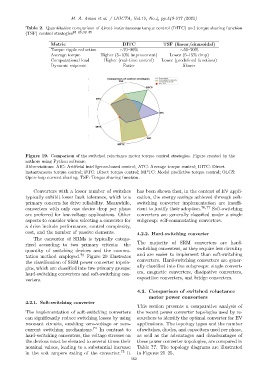
            Figure 19. Comparison of the switched reluctance motor torque control strategies. Figure created by the
            authors using Python software
            Abbreviations: AIC: Artificial intelligence-based control; ATC: Average torque control; DITC: Direct
            instantaneous torque control; DTC: Direct torque control; MPTC: Model predictive torque control; OLCS:
            Open-loop current sharing; TSF: Torque sharing function.

                Converters with a lesser number of switches   has been shown that, in the context of EV appli-
            typically exhibit lower fault tolerance, which is a  cation, the energy savings achieved through soft-
            primary concern for drive reliability. Meanwhile,  switching converter implementation are insuffi-
            converters with only one device drop per phase    cient to justify their adoption. 76,77  Soft-switching
            are preferred for low-voltage applications. Other  converters are generally classified under a single
            aspects to consider when selecting a converter for  subgroup: self-commutating converters.
            a drive include performance, control complexity,
            cost, and the number of passive elements.         4.2.2. Hard-switching converter
                The converter of SRMs is typically catego-
                                                              The majority of SRM converters are hard-
            rized according to two primary criteria:    the
                                                              switching converters, as they require less circuitry
            quantity of switching devices and the commu-
            tation method employed.  73  Figure 20 illustrates  and are easier to implement than soft-switching
                                                              converters. Hard-switching converters are gener-
            the classification of SRM power converter topolo-
                                                              ally classified into five subgroups: single convert-
            gies, which are classified into two primary groups:
                                                              ers, magnetic converters, dissipative converters,
            hard-switching converters and soft-switching con-
                                                              capacitive converters, and bridge converters.
            verters.
                                                              4.3. Comparison of switched reluctance
                                                                   motor power converters
            4.2.1. Soft-switching converter
                                                              This section presents a comparative analysis of
            The implementation of soft-switching converters   the recent power converter topologies used by re-
            can significantly reduce switching losses by using  searchers to identify the optimal converter for EV
            resonant circuits, enabling zero-voltage or zero-  applications. The topology types and the number
            current switching mechanisms. 74  In contrast to  of switches, diodes, and capacitors used per phase,
            hard-switching converters, the voltage stresses on  as well as the advantages and disadvantages of
            the devices must be elevated to several times their  these power converter topologies, are compared in
            nominal values, leading to a substantial increase  Table ??. The topology diagrams are illustrated
            in the volt–ampere rating of the converter. 75  It  in Figures 21–25.
                                                           562

