


Page 14 - IMO-1-1
P. 14
Innovative Medicines & Omics                                         Antioxidant nanomedicines for therapies


            A                                        B


                                                     C


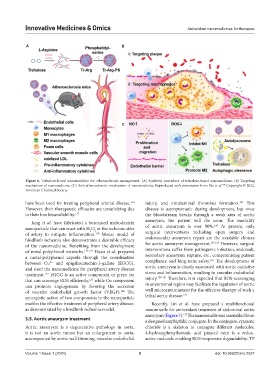
            Figure  6.  Trehalose-based  nanomedicine  for  atherosclerosis  management.  (A)  Synthetic  procedure  of  trehalose-based  nanomedicine.  (B)  Targeting
                                                                                                106
            mechanism of nanomedicine. (C) Anti-atherosclerotic mechanism of nanomedicine. Reproduced with permission from Wu et al.  Copyright © 2022,

            American Chemical Society.
            have been used for treating peripheral arterial disease.    injury,  and  intraluminal  thrombus  formation.   This
                                                         116
                                                                                                       125
            However, their therapeutic efficacies are unsatisfying due   disease is asymptomatic during development, but once
            to their low bioavailability. 117                  the bloodstream breaks through a weak area of aortic
              Jung  et al.  have fabricated  a  boronated  maltodextrin   aneurysm,  the  patient  will  die  soon.  The  mortality
                                                                                            126
            nanoparticle that can react with H O  at the ischemic sites   of  aortic  aneurysm  is  over  90%.   At  present,  only
                                       2
                                         2
            of  artery  to  mitigate  inflammation.  Mouse model of   surgical  interventions  including  open  surgery  and
                                          118
            hindlimb ischemia also demonstrates a desirable efficacy   endovascular aneurysm repair are the available choices
            of  the  nanomedicine.  Benefiting  from  the  development   for aortic aneurysm management. 127,128  However, surgical
            of metal-polyphenol networks. 119-121  Duan et al. prepared   interventions suffer from pathogenic infection, endoleak,
            a  metal-polyphenol  capsule  through  the  coordination   secondary aneurysm rupture, etc., compromising patient
                                                                                          127
            between Cu   and  epigallocatechin-3-gallate  (EGCG),   compliance  and  long-term  safety.  The development of
                      2+
            and used the nanomedicine for peripheral artery disease   aortic aneurysm is closely associated with aortic oxidative
            treatment.  EGCG is an active component of green tea   stress and inflammation, resulting in vascular endothelial
                    122
                                                                    129-131
            that can scavenge ROS efficiently,  while Cu component   injury.   Therefore, it is expected that ROS-scavenging
                                       123
            can promote angiogenesis by favoring the secretion   in aneurysmal region may facilitate the regulation of aortic
            of  vascular  endothelial  growth  factor  (VEGF).  The   wall microenvironment for the effective therapy of such a
                                                    124
                                                                               132
            synergistic action of two components in the nanoparticle   lethal aortic disease.
            enables the effective treatment of peripheral artery disease,   Recently, Lin  et al. have prepared a multifunctional
            as demonstrated by a hindlimb ischemia model.      nanomicelle for antioxidant treatment of abdominal aortic
                                                                               133
                                                               aneurysm (Figure 7). The nanomicelle was assembled from
            3.5. Aortic aneurysm treatment                     a designed amphiphilic conjugate. In the conjugate, cyanuric
            Aortic  aneurysm  is  a  degenerative  pathology  in  aorta,   chloride is a skeleton to conjugate different molecules,
            it is not an aortic tumor but an enlargement in aorta,   4-hydroxyphenylboronic  acid  pinacol  ester  is  a  redox-
            accompanied by aortic wall thinning, vascular endothelial   active molecule enabling ROS-responsive degradability. TP

            Volume 1 Issue 1 (2024)                         8                                doi: 10.36922/imo.2527

