


Page 19 - IMO-1-1
P. 19
Innovative Medicines & Omics                                         Antioxidant nanomedicines for therapies


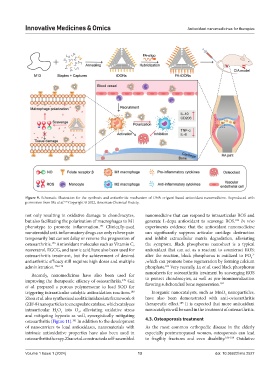
            Figure  9.  Schematic  illustration  for  the  synthesis  and  antiarthritic  mechanism  of  DNA  origami-based  antioxidant  nanomedicine.  Reproduced  with
                            158
            permission from Ma et al.  Copyright © 2022, American Chemical Society.
            not only resulting in oxidative damage to chondrocytes,   nanomedicine that can respond to intraarticular ROS and
            but also facilitating the polarization of macrophages to M1   generate  L-dopa  antioxidant  to  scavenge  ROS.   In vivo
                                                                                                     182
            phenotype  to  promote  inflammation.   Clinically-used   experiments  evidence  that  the  antioxidant  nanomedicine
                                           174
            nonsteroidal anti-inflammatory drugs can only relieve pain   can significantly suppress articular cartilage destruction
            temporarily but cannot delay or reverse the progression of   and inhibit extracellular matrix degradation, alleviating
            osteoarthritis.  Antioxidant molecules such as Vitamin C,   the  symptom.  Black  phosphorus  nanosheet  is  a  typical
                       175
            resveratrol, EGCG, and tannic acid have also been used for   antioxidant that can act as a reactant to counteract ROS;
            osteoarthritis treatment, but the achievement of desired   after  the  reaction,  black  phosphorus  is  oxidized  to  PO 4 3-
            antiarthritic efficacy still requires high doses and multiple   ,which can promote bone regeneration by forming calcium
            administration. 176-178                            phosphate.  Very recently, Lu et al. used black phosphorus
                                                                       183
              Recently, nanomedicines have also been used for   nanosheets for osteoarthritis treatment by scavenging ROS
                                                     179
            improving the therapeutic efficacy of osteoarthritis.  Gui   to  protect  chondrocytes,  as  well  as  pro-biomineralization
                                                                                               184
            et  al.  prepared  a  porous  polymersome  to  load  SOD  for   favoring subchondral bone regeneration.
            triggering intraarticular catalytic antioxidation reactions.    Inorganic nanocatalysts, such as MnO  nanoparticles,
                                                         180
                                                                                                 2
            Zhou et al. also synthesized zeolitic imidazolate framework-8   have  also  been  demonstrated  with  anti-osteoarthritis
            (ZIF-8) nanoparticles to encapsulate catalase, which catalyzes   therapeutic effect.  It is expected that more antioxidant
                                                                             185
            intraarticular H O  into O , alleviating oxidative stress   nanocatalysts will be used in the treatment of osteoarthritis.
                         2
                                  2
                           2
            and  mitigating hypoxia  as well, synergistically mitigating
            osteoarthritis (Figure 11).  In addition to the development   4.3. Osteoporosis treatment
                                181
            of nanocarriers to load antioxidases, nanomaterials with   As  the  most  common  orthopedic  disease  in  the  elderly
            intrinsic antioxidative properties have also been used in   especially postmenopausal women, osteoporosis can lead
            osteoarthritis therapy. Zhao et al. constructed a self-assembled   to  fragility  fractures  and  even  disability. 186-188  Oxidative
            Volume 1 Issue 1 (2024)                         13                               doi: 10.36922/imo.2527

