


Page 20 - IMO-1-1
P. 20
Innovative Medicines & Omics                                         Antioxidant nanomedicines for therapies


                         A                                   B


                         C                            D              E


                         F


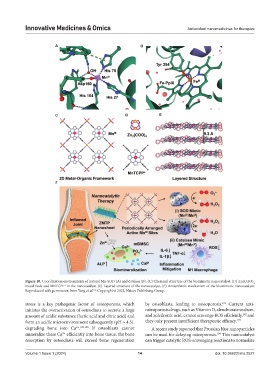
            Figure 10. Coordination environments of natural Mn-SOD (A) and catalase (B). (C) Chemical structure of the biomimetic nanocatalyst. (D) Zn(COO)   4
            metal node and MnTCPP  in the nanocatalyst. (E) Layered structure of the nanocatalyst. (F) Antiarthritic mechanism of the biomimetic nanocatalyst.
                            +
            Reproduced with permission from Yang et al.  Copyright © 2022, Nature Publishing Group.
                                         166
            stress is a key pathogenic factor of osteoporosis, which   by  osteoblasts,  leading  to  osteoporosis.   Current  anti-
                                                                                                191
            initiates the overactivation of osteoclasts to secrete a large   osteoporosis drugs, such as Vitamin D, alendronate sodium,
                                                                                                        192
            amount of acidic substance (lactic acid and citric acid) and   and zoledronic acid, cannot scavenge ROS efficiently,  and
            form an acidic microenvironment subsequently (pH ≈ 4.5),   they only present insufficient therapeutic efficacy. 193
            degrading bone into Ca .     If  osteoblasts  cannot   A recent study reported that Prussian blue nanoparticles
                                 2+ 189,190
            mineralize these Ca  efficiently into bone tissue, the bone   can be used for delaying osteoporosis.  This nanocatalyst
                            2+
                                                                                             194
            resorption by osteoclasts will exceed bone regeneration   can trigger catalytic ROS-scavenging reactions to normalize
            Volume 1 Issue 1 (2024)                         14                               doi: 10.36922/imo.2527

