


Page 81 - IMO-2-3
P. 81
Innovative Medicines & Omics                                  Synthesis and docking of diorganotin (IV) chelates


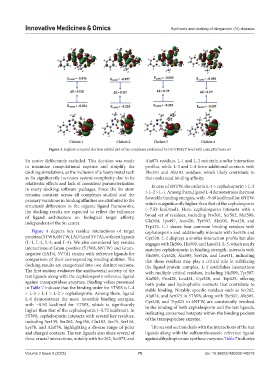
                      Figure 3. Highest occupied electron orbital plot of Sn-complexes performed by DFT/B3LYP level with LanL2DZ basis set

            Sn center deliberately excluded. This decision was made   Ala074 residues. L-1 and L-2 maintain similar interaction
            to minimize computational expense and simplify the   profiles, while L-3 and L-4 form additional contacts with
            docking simulations, as the inclusion of a heavy metal such   Phe241 and Ala182 residues, which likely contribute to
            as Sn significantly increases system complexity due to its   their enhanced binding affinity.
            relativistic effects and lack of consistent parameterization   In case of 6NTW, the order is L-4 > cephalosporin > L-3
            in many docking software packages. Since the Sn atom   > L-2 > L-1. Among them, ligand L-4 demonstrates the most
            remains constant across all complexes studied and the
            primary variations in binding affinities are attributed to the   favorable binding energies, with −9.48 kcal/mol for 6NTW,
            structural differences in the organic ligand frameworks,   which is significantly higher than that of the cephalosporin
            the docking results are expected to reflect the influence   (−7.53  kcal/mol).  Here, cephalosporin  interacts  with  a
            of ligand architecture on biological target affinity,   broad set of residues, including Pro501, Ser502, Met500,
            independent of the Sn center.                      Glu504, Lys497, Asn426, Tyr507, Ala505, Pro428, and
                                                               Trp425. L-1 shares four common binding residues with
              Figure  4 depicts key residue interactions of target   cephalosporin and additionally interacts with Ser526 and
            proteins (5TW8, 6NTW, 1AD4, and 5V7A), with test ligands   Cys528. L-2 displays a similar interaction profile but also
            (L-1, L-2, L-3, and L-4). We also considered key residue   engages with Ile506, His509, and Leu431. L-3, which nearly
            interactions of Gram-positive (5TW8, 6NTW) and Gram-  matches cephalosporin in binding strength, interacts with
            negative (1AD4, 5V7A) strains with reference ligands for   His509, Cys528, Ala505, Ser526, and Leu431, indicating
            comparison of their corresponding binding abilities. The   that these residues may play a critical role in stabilizing
            docking results are categorized into two distinct sections.   the ligand-protein complex. L-4 establishes interactions
            The first section evaluates the antibacterial activity of the   with multiple critical residues, including His509, Tyr507,
            test ligands along with the cephalosporin reference ligand   Ala505, Pro428, Leu431, Cys528, and Trp425, offering
            against transpeptidase enzymes. Binding values presented   both polar and hydrophobic contacts that contribute to
            in Table 7 indicate that the binding order for 5TW8 is L-4   stable binding. Notably, specific residues such as Ser262,
            > L-3 > L-1 > L-2 > cephalosporin. Among them, ligand   Ala074, and Ser075 in 5TW8, along with Tyr507, Ala505,
            L-4 demonstrates the most favorable binding energies,   Cys528, and Trp425 in 6NTW, are consistently involved
            with −8.50 kcal/mol for 5TW8, which is significantly   in the binding of both cephalosporin and the test ligands,
            higher than that of the cephalosporin (−5.72 kcal/mol). In   indicating conserved hotspots within the binding pockets
            5TW8, cephalosporin interacts with several key residues,   of the transpeptidase enzyme.
            including Ser139, Ser262, Arg186, Glu183, Ser75, Ser116,
            Lys78, and Ala074, highlighting a diverse range of polar   The second section deals with the interactions of the test
            and charged contacts. The test ligands also share several of   ligands along with the sulfamethoxazole reference ligand
            these crucial interactions, notably with Ser262, Ser075, and   against dihydropteroate synthase enzymes. Table 7 indicates


            Volume 2 Issue 3 (2025)                         75                          doi: 10.36922/IMO025140019

