


Page 79 - IMO-2-3
P. 79
Innovative Medicines & Omics                                  Synthesis and docking of diorganotin (IV) chelates


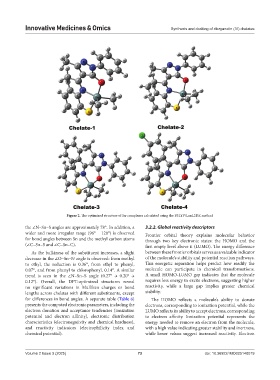
                             Figure 2. The optimized structure of Sn-complexes calculated using the B3LYP/LanL2DZ method

            the ∠N–Sn–S angles are approximately 78°. In addition, a   3.2.2. Global reactivity descriptors
            wider and more irregular range (96° – 120°) is observed   Frontier orbital theory explains molecular behavior
            for bond angles between Sn and the methyl carbon atoms   through two key electronic states: the HOMO and the
            (∠C–Sn–S and ∠C–Sn–C).                             first empty level above it (LUMO). The energy difference
              As the bulkiness of the substituent increases, a slight   between these frontier orbitals serves as a valuable indicator
            decrease in the ∠O–Sn–N angle is observed: from methyl   of the molecule’s stability and potential reaction pathways.
            to ethyl, the reduction is 0.36°,  from ethyl  to phenyl,   This energetic separation helps predict how readily the
            0.07°, and from phenyl to chlorophenyl, 0.14°. A similar   molecule can participate in chemical transformations.
            trend is seen in the  ∠N–Sn–S angle (0.27° → 0.20° →   A small HOMO-LUMO gap indicates that the molecule
            0.12°). Overall, the DFT-optimized structures reveal   requires less energy to excite electrons, suggesting higher
            no significant variations in Mulliken charges or bond   reactivity, while a large gap implies greater chemical
            lengths across chelates with different substituents, except   stability.
            for differences in bond angles. A separate table (Table 6)   The HOMO reflects a molecule’s ability to donate
            presents the computed electronic parameters, including the   electrons, corresponding to ionization potential, while the
            electron donation and acceptance tendencies (ionization   LUMO reflects its ability to accept electrons, corresponding
            potential and electron affinity), electronic distribution   to  electron  affinity.  Ionization  potential  represents the
            characteristics (electronegativity and chemical hardness),   energy needed to remove an electron from the molecule,
            and reactivity indicators (electrophilicity index and   with a high value indicating greater stability and inertness,
            chemical potential).                               while lower values suggest increased reactivity. Electron


            Volume 2 Issue 3 (2025)                         73                          doi: 10.36922/IMO025140019

