


Page 83 - ITPS-7-1
P. 83
INNOSC Theranostics and
            Pharmacological Sciences                                                PfHSP and polyamines interactions


            A                                B                             C


            D                                                 E


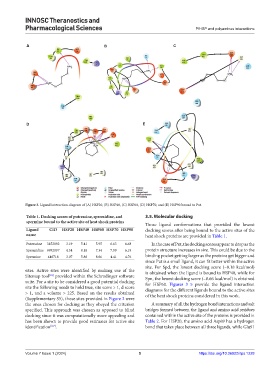
            Figure 3. Ligand interaction diagram of (A) HSP20, (B) HSP40, (C) HSP60, (D) HSP70, and (E) HSP90 bound to Put.

            Table 1. Docking scores of putrescine, spermidine, and   3.5. Molecular docking
            spermine bound to the active site of heat shock proteins
                                                               Those ligand conformations that provided the lowest
            Ligand    CID  HSP20 HSP40 HSP60 HSP70 HSP90       docking scores after being bound to the active sites of the
            name                                               heat shock proteins are provided in Table 1.
            Putrescine  3452892  −3.19  −5.41  −5.95  −6.63  −6.68  In the case of Put, the docking scores appear to drop as the
            Spermidine 6992097  −4.54  −8.18  −7.34  −7.99  −6.19  protein structure increases in size. This could be due to the
            Spermine  446718  −3.07  −5.86  −8.66  −4.41  −4.76  binding pocket getting larger as the proteins get bigger and
                                                               since Put is a small ligand, it can fit better within the active
                                                               site. For Spd, the lowest docking score (–8.18 kcal/mol)
            sites. Active sites were identified by making use of the   is obtained when the ligand is bound to HSP40, while for
            Sitemap tool  provided within the Schrodinger software   Spn, the lowest docking score (–8.66 kcal/mol) is obtained
                      [18]
            suite. For a site to be considered a good potential docking   for HSP60.  Figures  3–5 provide the ligand interaction
            site the following needs to hold true, site score > 1, d score   diagrams for the different ligands bound to the active sites
            > 1, and a volume > 225. Based on the results obtained   of the heat shock proteins considered in this work.
            (Supplementary S5), those sites provided in Figure 2 were
            the ones chosen for docking as they obeyed the criterion   A summary of all the hydrogen bond interactions and salt
            specified. This approach was chosen as opposed to blind   bridges formed between the ligand and amino acid residues
            docking since it was computationally more appealing and   contained within the active site of the proteins is provided in
            has been shown to provide good estimates for active site   Table 2. For HSP20, the amino acid Asp89 has a hydrogen
            identification [6,7] .                             bond that takes place between all three ligands, while Glu91


            Volume 7 Issue 1 (2024)                         5                         https://doi.org/10.36922/itps.1228

