


Page 85 - ITPS-7-1
P. 85
INNOSC Theranostics and
            Pharmacological Sciences                                                PfHSP and polyamines interactions


                          A                                            B


                          C                                            D


                          E


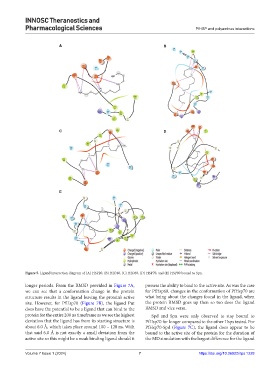
            Figure 5. Ligand interaction diagram of (A) HSP20, (B) HSP40, (C) HSP60, (D) HSP70, and (E) HSP90 bound to Spn.

            longer periods. From the RMSD provided in Figure 7A,   possess the ability to bind to the active site. As was the case
            we can see that a conformation change in  the protein   for PfHsp60, changes in the conformation of PfHsp70 are
            structure results in the ligand leaving the protein’s active   what bring about the changes found in the ligand, when
            site. However, for PfHsp70 (Figure  7B), the ligand Put   the protein RMSD goes up then so too does the ligand
            does have the potential to be a ligand that can bind to the   RMSD and vice versa.
            protein for the entire 200 ns timeframe as we see the highest   Spd  and  Spn  were  only  observed  to  stay  bound  to
            deviation that the ligand has from its starting structure is   PfHsp70 for longer compared to the other Hsps tested. For
            about 6.0 Å, which takes place around 100 – 120 ns. With   PfHsp70-Spd (Figure  7C), the ligand does appear to be
            that said 6.0 Å is not exactly a small deviation from the   bound to the active site of the protein for the duration of
            active site so this might be a weak binding ligand should it   the MD simulation with the largest difference for the ligand


            Volume 7 Issue 1 (2024)                         7                         https://doi.org/10.36922/itps.1228

