


Page 84 - ITPS-7-1
P. 84
INNOSC Theranostics and
            Pharmacological Sciences                                                PfHSP and polyamines interactions


            has a hydrogen bond present for ligands Put and Spd. Asp24   produced during the MD simulation. Figure 6 does show
            shows a hydrogen bond between Spd and Spn. It is this   that PfHsp20, PfHsp40, and PfHsp70 stabilize within the
            combination of salt bridges and hydrogen bond interactions   200 ns, but PfHsp60 and PfHsp90 appeared to have some
            that adds to the protein-ligand complex stability.  excess fluctuations towards the end of the 200 ns. Although
                                                               this was the case, it was decided that we would make use
            3.6. MD                                            of a maximum of 200 ns for the protein-ligand complex
            Before we investigated the results obtained for the various HSP   simulations due to the limited resources that we had access
            complexes, we first needed to make sure that the environment   to at the high-performance computing center.
            chosen for our MD studies was appropriate. Figure 6 shows   MD simulations of the Hsps with the polyamines
            the root mean square deviation (RMSD) results obtained for   showed that putrescine best binds to PfHsp60 and PfHsp70
            200 ns simulations of (A) HSP20, (B) HSP40, (C) HSP60, (D)   (Figure 7) compared to the other Hsps. Put seems to remain
            HSP70, and (E) HSP90 when there were no ligands present   strongly bound to the active site of PfHsp60 for around 125
            within the active site of the proteins.            ns before the ligand begins to drift away from the active
            The RMSD is used for measuring the changes that take place   site, reaching distances of up to 14 Å from the starting
            in the protein while present in a solvated environment .   structure (Figure 7A). For ligands to be considered good
                                                        [25]
            A protein’s stability can be determined by the deviations   inhibitors, they need to remain bound to the active site for


            A                                           B                          C


            D                                                 E


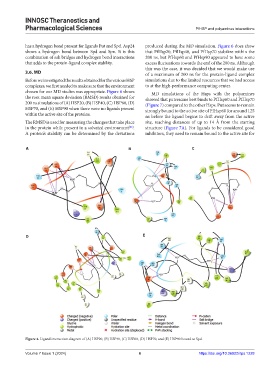
            Figure 4. Ligand interaction diagram of (A) HSP20, (B) HSP40, (C) HSP60, (D) HSP70, and (E) HSP90 bound to Spd.


            Volume 7 Issue 1 (2024)                         6                         https://doi.org/10.36922/itps.1228

