


Page 42 - ITPS-8-2
P. 42
INNOSC Theranostics and
            Pharmacological Sciences                                              MDD biomarkers: Clinical implications


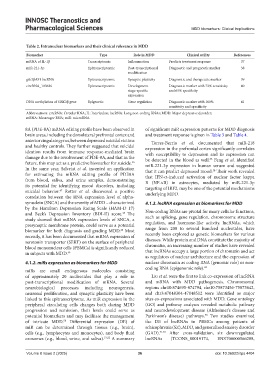
            Table 2. Intranuclear biomarkers and their clinical relevance in MDD
            Biomarker                      Type           Role in MDD           Clinical utility    References
            mRNA of IL-1β             Transcriptomic   Inflammation      Predicts treatment response   37
            miR-221-3p                Epitranscriptomic  Post-transcriptional   Diagnostic and prognostic marker  38
                                                       modification
            gsk3βAS1 lncRNA           Epitranscriptomic  Synaptic plasticity  Diagnostic and therapeutic marker  39
            circRNA_103636            Epitranscriptomic  Development     Diagnostic marker with 73% sensitivity   40
                                                       stage-specific    and 65% specificity
                                                       expression
            DNA methylation of GSK3β gene  Epigenetic  Gene regulation   Diagnostic marker with 100%   41
                                                                         sensitivity and specificity
            Abbreviations: circRNA: Circular RNA; IL: Interleukin; lncRNA: Long non-coding RNAs; MDD: Major depressive disorder;
            mRNA: Messenger RNA; miR: microRNA.

            8A (PDE-8A) mRNA editing profile have been observed in   of significant miR expression patterns for MDD diagnosis
            brain areas, including the dorsolateral prefrontal cortex and   and treatment response is given in Table 3 and Table 4.
            anterior cingulate gyrus, between depressed suicidal victims   Torres-Berrio  et al. documented that miR-218
            and healthy controls. They further suggested that suicidal   expression in the prefrontal cortex significantly correlates
            ideation results from immune response-mediated brain   with susceptibility to depression and its expression can
            damage due to the involvement of PDE-8A, and that in the   be detected in the blood as well.  Feng  et al. identified
                                                                                          68
            future, this may act as a predictive biomarker for suicide.    miR-221-3p expression in human serum and suggested
                                                         46
            In the same year, Salvetat  et al. invented an application   that it can predict depressed mood.  Their work revealed
                                                                                           38
            for  estimating  the  mRNA  editing  profile  of  PDE8A   that IFN-α-induced activation of nuclear  factor  kappa
            from  blood, saliva, and  urine  samples,  demonstrating   B (NF-κB) in astrocytes, mediated by miR-221-3p
            its potential for identifying mood disorders, including   targeting of IRF2, may be one of the potential mechanisms
            suicidal behavior.  Rotter  et al. discovered a positive   underlying MDD.
                          47
            correlation between the RNA expression level of alpha-
            synuclein (SNCA) and the severity of MDD – characterized   4.1.3. lncRNA expression as biomarkers for MDD
            by the Hamilton Depression Rating Scale (HAM-D 17)
            and Beck’s Depression Inventory (BDI-II) score.  The   Non-coding RNAs are pivotal for many cellular functions,
                                                     48
            study showed that mRNA expression levels of SNCA, a   such as splicing, gene regulation, chromosome structure
            presynaptic membrane protein, could serve as a potential   regulation, and hormone-like activity. lncRNAs, which
            biomarker for both diagnosis and grading MDD.  Most   range from 200 to several hundred nucleotides, have
                                                    48
            recently, it has been documented that mRNA expression of   recently been explored as genetic biomarkers for various
            serotonin transporter (SERT) on the surface of peripheral   diseases. While protein and DNA constitute the majority of
            blood mononuclear cells (PBMCs) is significantly reduced   chromatin, an increasing number of studies have revealed
            in subjects with MDD. 49                           that lncRNAs occupy a large portion of chromatin and act
                                                               as regulators of nuclear architecture and the expression of
            4.1.2. miRs expression as biomarkers for MDD       nuclear chromatin as coding RNA (genomic role) or non-
                                                               coding RNA (epigenomic role). 69
            miRs are small endogenous molecules consisting
            of approximately 20 nucleotides that play a role in   Liu et al. were the first to link co-expression of lncRNA
            post-transcriptional  modification of mRNA. Several   and mRNA with MDD pathogenesis. Chromosomal
            neurobiological  processes  including  neurogenesis,  regions chr10:874695-874794, chr10:75873456-75873642,
            neuronal proliferation, and synaptic plasticity have been   and chr3:47048304-47048512 were identified as major
            linked to this epitranscriptome. As miR expression in the   sites co-expressions associated with MDD. Gene ontology
            peripheral circulating cells changes both during MDD   (GO)  and pathway analyses  revealed metabolic pathway
            progression and remission, their levels could serve as   and neurodevelopment disease (Alzheimer’s disease and
            potential biomarkers and may facilitate the management   Parkinson’s disease) pathways.  Two studies examined
                                                                                        70
            of intricate MDD.  Differential expression (DE) of   the  DE  of  lncRNAs  in  PBMCs  among patients  of
                            50
            miR can be determined through tissues (e.g., brain),   schizophrenia (SZ), MDD, and generalized anxiety disorder
            cells (e.g.,  lymphocytes and monocytes), and body fluid   (GAD). 71,72  After cross-validation, six downregulated
            exosomes (e.g., blood, urine, and saliva). 51,52  A summary   lncRNAs  (TCONS_00019174,  ENST00000566208,


             Volume 8 Issue 2 (2025)                        36                               doi: 10.36922/itps.4404

