


Page 48 - JCAU-4-1
P. 48
Two Water Towns in the Qingpu District of Shanghai                                                                            Semprebon


               shores  experienced  a  growing  interest  by       Water  towns  were  lively  economic
               institutions  and  administrations  which  are   centres   in   pre-modern    China.    As
               eager  to  exploit  the  new  cultural  status.   manufacturing  and  trading  hubs,  they
               Despite  this  favourable  condition,  experts   attracted  entrepreneurs,  literati,  and  retired
               noticed that relatively little attention had been   officials,   who   invested   in   mansion
               directed  to  the  settlements’  overall  patterns   constructions  to  showcase  their  social
               and  morphological  features    [53] ,  mainly   emancipation  [57] . The symbiotic relationship
               relegating  the  heritage  domain  to  single   between the watercourse and the surrounding
               monuments  or  episodic  artefacts.  This      environment  was  the  principal  element
               developmental approach caused disharmonic      structuring  the  formal  qualities  of  the
               transitions between traditional ambiences and   settlements’  fabrics.  Its  importance  in
               surrounding fabrics, readable in the physical   Chinese urban culture led German sinologist
               relationships between the old and the new in   Karl Wittfogel  [58]  to coin the term “hydraulic
               the  community’s  social  structure,  with  the   civilization”  to  address  the  “intimate  link
               margination of certain citizen groups.         between environmental authority in the form
                                                              of water control and political power”  [59] .
               4.1  Water towns in the Southern Yangtze            Many water towns in the Lake Tai Basin
                    River Delta                               have  already  been  included  in  the  lists  of
               Water towns in the southern Yangtze River      historic and traditional settlements compiled
               Delta  are  unique  artefacts  in  China  that   by the Ministry of Housing and Urban-Rural
               represent  an  outstanding  balance  of  natural   Development and the State Administration of
               and  cultural  environments   [54-56] .  They  are   Cultural Heritage. Over the last decades, their
               situated in a complex and multi-scalar water   distinctive built environments have been seen
               system  whose  main  arteries,  the  Yangtze   as  a  lucrative  ambience  for  mass  tourism
               River and the Grand Canal, regiment a fine-    consumption, activating a process of heritage
               grained  canal  network,  covering  the  area   commodification  [Figure  3].  Their  Historic
               between  Shanghai,  Suzhou,  Hangzhou,  and    Urban  Landscapes’  spatial  experience   [60]
               the Lake Tai. Philip Ball argued that “there   underwent  a  process  of  fragmentation  with
               could  be  few  locations  of  more  strategic   the  introduction  of  activities  and  spaces
               importance  to  China’s  water  transport      dedicated to visitors, such as souvenir shops
               network than the junction of the Yangtze with   run by a new class of merchants or turnstiles
               the Grand Canal”  [54] .                       and gates where entrance fees are collected
                                                              [61] .


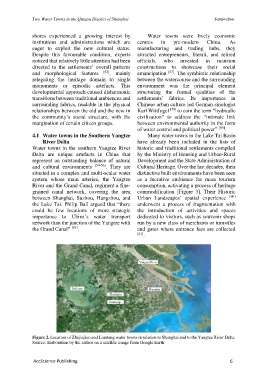
               Figure 2. Location of Zhujiajiao and Liantang water towns in relation to Shanghai and to the Yangtze River Delta.
               Source: Elaboration by the author on a satellite image from Google Earth


                AccScience Publishing                                                                  6

