


Page 49 - JCAU-4-1
P. 49
Two Water Towns in the Qingpu District of Shanghai                                                                            Semprebon


                                                              another  significant  feature:  they  are
                                                              incorporated  into  the  urban  fabric,  but  they
                                                              can  be  seen  as  both  “distinctive  from  and
                                                              integrated  into  the  field”   [64,  65] .  Chow  also
                                                              remarked how the recent constructions in the
                                                              outskirts  of  Zhujiajiao  followed  alien
                                                              schemes,    generating   incongruent    and
                                                              imbalanced  relationships  with  the  historical
                                                              parts.

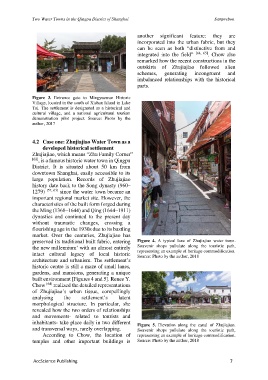
               Figure  3.  Entrance  gate  to  Mingyuewan  Historic
               Village, located in the south of Xishan Island in Lake
               Tai. The settlement  is designated as a historical  and
               cultural  village,  and  a  national  agricultural  tourism
               demonstration  pilot  project.  Source:  Photo  by  the
               author, 2017


               4.2  Case one: Zhujiajiao Water Town as a
                    developed historical settlement
               Zhujiajiao, which means “Zhu Family Corner”
               [62] , is a famous historic water town in Qingpu
               District.  It  is  situated  about  50  km  from
               downtown Shanghai, easily accessible to its
               large  population.  Records  of  Zhujiajiao
               history date back to the Song dynasty (960‒
               1279)  [57, 63]  since the water town became an
               important regional market site. However, the
               characteristics of the built form forged during
               the Ming (1368‒1644) and Qing (1644‒1911)
               dynasties  and  continued  to  the  present  day
               without  traumatic  changes,  crossing  a
               flourishing age in the 1930s due to its bustling
               market.  Over  the  centuries,  Zhujiajiao  has
               preserved its traditional built fabric, entering   Figure  4.  A  typical  lane  of  Zhujiajiao  water  town.
               the new millennium’ with an almost entirely    Souvenir  shops  pullulate  along  the  touristic  path,
                                                              representing an example of heritage commodification.
               intact  cultural  legacy  of  local  historic   Source: Photo by the author, 2018
               architecture  and  urbanism.  The  settlement’s
               historic centre is still a maze of small lanes,
               gardens, and mansions, generating a unique
               built environment [Figures 4 and 5]. Renee Y.
               Chow   [64]  realized the detailed representations
               of  Zhujiajiao’s  urban  tissue,  compellingly
               analysing     the     settlement’s     latent
               morphological  structure.  In  particular,  she
               revealed how the two orders of relationships
               and  movements-  related  to  tourists  and
               inhabitants- take place daily in two different   Figure  5.  Elevation  along  the  canal  of  Zhujiajiao.
               and transversal ways, rarely overlapping.      Souvenir  shops  pullulate  along  the  touristic  path,
                    According  to  Chow,  the  location  of   representing an example of heritage commodification.
               temples  and  other  important  buildings  is   Source: Photo by the author, 2018


                AccScience Publishing                                                                  7

