


Page 38 - JCTR-10-2
P. 38
132                       Abtahi et al. | Journal of Clinical and Translational Research 2024; 10(2): 119-140
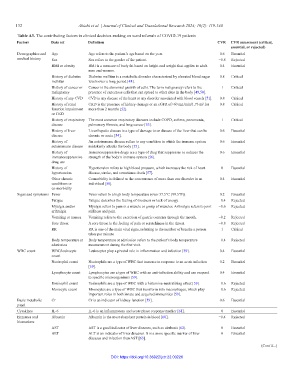
        Table A3. The contributing factors in clinical decision-making on ward referrals of COVID-19 patients
        Factors       Data set        Definition                                            CVR  CVR assessment (critical,
                                                                                                 essential, or rejected)
        Demographics and   Age        Age refers to the patient’s age based on the year.     0.6  Essential
        medical history  Sex          Sex refers to the gender of the patient.              −0.8  Rejected
                       BMI or obesity  BMI is a measure of body fat based on height and weight that applies to adult   0.4  Essential
                                      men and women.
                       History of diabetes   Diabetes mellitus is a metabolic disorder characterized by elevated blood sugar   0.8  Critical
                       mellitus       levels over a long period [48].
                       History of cancer or   Cancer is the abnormal growth of cells. The term malignancy refers to the   1  Critical
                       malignancy     presence of cancerous cells that can spread to other sites in the body [49,50].
                       History of any CVD  CVD is any disease of the heart or any disorder associated with blood vessels [51].  0.8  Critical
                       History of renal   CKD is the presence of kidney damage or an eGFR of<60 mL/min/1.73 m  for   0.8  Critical
                                                                                      2
                       function impairment   more than 2 months [52].
                       or CKD
                       History of respiratory  The most common respiratory diseases include COPD, asthma, pneumonia,   1  Critical
                       disease        pulmonary fibrosis, and lung cancer [53].
                       History of liver   Liver/hepatic disease is a type of damage to or disease of the liver that can be   0.6  Essential
                       disease        chronic or acute [54].
                       History of     An autoimmune disease refers to any condition in which the immune system   0.6  Essential
                       autoimmune disease  mistakenly attacks the body [55].
                       History of     Immunosuppressive drugs are a type of drug that suppresses or reduces the   0.6  Essential
                       immunosuppressive   strength of the body’s immune system [56].
                       drug use
                       History of     Hypertension refers to high blood pressure, which increases the risk of heart   0  Essential
                       hypertension   disease, stroke, and sometimes death [57].
                       Other chronic   Comorbidity is defined as the concurrence of more than one disorder in an   0.4  Essential
                       conditions or   individual [58].
                       co-morbidity
        Signs and symptoms Fever      Fever refers to a high body temperature (over 37.5°C [99.5°F]).  0.2  Essential
                       Fatigue        Fatigue describes the feeling of tiredness or lack of energy.  −0.4  Rejected
                       Myalgia and/or   Myalgia refers to pain in a muscle or group of muscles. Arthralgia refers to joint   −0.6  Rejected
                       arthralgia     stiffness and pain.
                       Vomiting or nausea  Vomiting refers to the excretion of gastric contents through the mouth.  −0.2  Rejected
                       Sore throat    A sore throat is the feeling of pain or scratchiness in the throat.  −0.8  Rejected
                       RR             RR is one of the main vital signs, referring to the number of breaths a person   1  Critical
                                      takes per minute
                       Body temperature at   Body temperature at admission refers to the patient’s body temperature   −0.4  Rejected
                       admission      measurement during the first visit.
        WBC count      WBC/leukocyte   Leukocytes play a pivotal role in inflammation and infection [59].  0.4  Essential
                       count
                       Neutrophil count  Neutrophils are a type of WBC that increase in response to an acute infection   0.2  Essential
                                      [59].
                       Lymphocyte count  Lymphocytes are a type of WBC with an anti-infection ability and can respond   0.4  Essential
                                      to specific microorganisms [59].
                       Eosinophil count  Eosinophils are a type of WBC with a histamine-neutralizing effect [59].  −0.6  Rejected
                       Monocyte count  Monocytes are a type of WBC that transform into macrophages, which play   −0.6  Rejected
                                      important roles in both innate and acquired immunities [59].
        Basic metabolic   Cr          Cr is an indicator of kidney function [59].            0.6  Essential
        panel
        Cytokines      IL-6           IL-6 is an inflammatory and acute phase response marker [61].  0  Essential
        Enzymes and    Albumin        Albumin is the most abundant protein in blood [60].   −0.4  Rejected
        biomarkers
                       AST            AST is a good indicator of liver diseases, such as cirrhosis [62].  0  Essential
                       ALT            ALT is an indicator of liver diseases. It is a more specific marker of liver   0  Essential
                                      diseases and infection than AST [63].
                                                                                                              (Cont’d...)

                                                DOI: https://doi.org/10.36922/jctr.22.00226

