


Page 97 - JCTR-11-5
P. 97
Journal of Clinical and
            Translational Research                                                  ROCK inhibition in chronic rejection


             A                                       B                           C


             D                                 E                               F


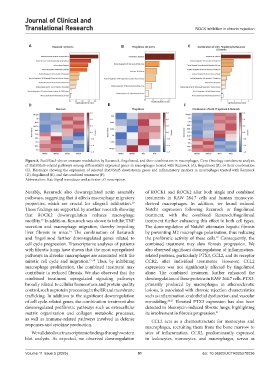
            Figure 8. Stat3/Stat5-driven immune modulation by Rezurock, fingolimod, and their combination in macrophages. Gene Ontology enrichment analysis
            of Stat3/Stat5-related pathways among differentially expressed genes in macrophages treated with Rezurock (A), fingolimod (B), or their combination
            (C). Heatmaps showing the expression of selected Stat3/Stat5 downstream genes and inflammatory markers in macrophages treated with Rezurock
            (D), fingolimod (E), and the combined treatment (F).
            Abbreviation: Stat: Signal transducer and activator of transcription.

            Notably,  Rezurock  also  downregulated  actin  assembly   of ROCK1 and ROCK2 after both single and combined
            pathways, suggesting that it affects macrophage migratory   treatments in RAW 264.7  cells and human monocyte-
            properties, which are crucial for allograft infiltration.    derived  macrophages.  In addition,  we  found  reduced
                                                         10
            These findings are supported by another research showing   Notch1  expression  following  Rezurock  or  fingolimod
            that  ROCK2 downregulation  reduces  macrophage    treatment, with the  combined Rezurock/fingolimod
                  15
            motility.  In addition, Rezurock was shown to inhibit TNF   treatment further enhancing this effect in both cell types.
            secretion and macrophage migration, thereby impeding   The downregulation of Notch1 attenuates hepatic fibrosis
            liver  fibrosis  in  mice.   The  combination  of  Rezurock   by preventing M2 macrophage polarization, thus reducing
                              16
            and fingolimod further downregulated genes related to   the profibrotic activity of these cells.  Consequently, the
                                                                                             19
            cell cycle progression. Transcriptome analyses of patients   combined treatment may slow fibrosis progression. We
            with fibrotic lungs have shown that the most upregulated   also observed significant downregulation of inflammation-
            pathways in alveolar macrophages are associated with the   related proteins, particularly PTX3, CCL2, and its receptor
            mitotic cell cycle and migration. 17,18  Thus, by inhibiting   CCR2, after individual treatments. However, CCL2
            macrophage proliferation, the combined treatment may   expression  was not significantly affected  by fingolimod
            contribute to reduced fibrosis. We also observed that the   alone. The combined treatment further enhanced the
            combined treatment upregulated signaling pathways   downregulation of these proteins in RAW 264.7 cells. PTX3,
            broadly related to cellular homeostasis and protein quality   primarily produced by macrophages in atherosclerotic
            control, such as protein processing in the ER and membrane   lesions, is associated with chronic rejection characteristics
            trafficking. In addition to the significant downregulation   such as inflammation, endothelial dysfunction, and vascular
            of cell cycle-related genes, the combination treatment also   remodeling. 20,21  Elevated PTX3 expression has also been
            downregulated profibrotic pathways such as extracellular   detected in bleomycin-induced fibrotic lungs, highlighting
            matrix organization and collagen metabolic processes,   its involvement in fibrosis progression. 21
            as well as immune-related pathways involved in defense   CCL2 acts as a chemoattractant for monocytes and
            responses and cytokine production.                 macrophages, recruiting them from the bone marrow to

              We validated our transcriptomic findings through western   sites of inflammation. CCR2, predominantly expressed
            blot analysis. As expected, we observed downregulation   in leukocytes, monocytes, and macrophages, serves as


            Volume 11 Issue 5 (2025)                        91                         doi: 10.36922/JCTR025270036

