


Page 76 - JCTR-9-4
P. 76
292                       Xu et al. | Journal of Clinical and Translational Research 2023; 9(4): 290-296

                          A                       B                       C


                          D                        E                      F


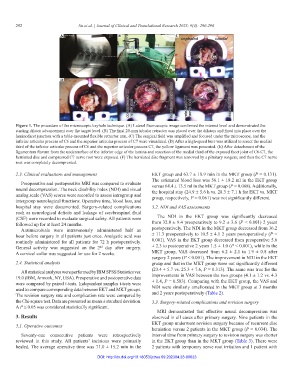
        Figure 1. The procedure of the microscopic keyhole technique. (A) Lateral fluoroscopic image confirmed the interest level and demonstrated the
        starting dilator advancement over the target level. (B) The final 20-mm tubular retractor was placed over the dilators and fixed into place over the
        laminofacet junction with a table-mounted flexible retractor arm. (C) The surgical field was amplified and focused under the microscope, and the
        inferior articular process of C6 and the superior articular process of C7 were visualized. (D) After a high-speed burr was utilized to resect the medial
        third of the inferior articular process of C6 and the superior articular process C7, the yellow ligament was presented. (E) After detachment of the
        ligamentum flavum from the undersurface of the inferior edge of the lamina and resection of the medial third of the exposed facet joint of C6-C7, the
        herniated disc and compressed C7 nerve root were exposed. (F) The herniated disc fragment was removed by a pituitary rongeur, and then the C7 nerve
        root was completely decompressed.
        2.3. Clinical evaluations and management                EKT group and 63.7 ± 18.9 min in the MKT group (P = 0.131).
                                                                The estimated blood loss was 56.1 ± 18.2 ml in the EKT group
          Preoperative and postoperative MRI was compared to evaluate   versus 64.4 ± 13.5 ml in the MKT group (P = 0.068). Additionally,
        neural decompression. The neck disability index (NDI) and visual   the hospital stay (24.9 ± 5.6 h vs. 28.3 ± 7.1 h for EKT vs. MKT
        analog scale (VAS) scores were recorded to assess intragroup and   group, respectively, P = 0.061) was not significantly different.
        intergroup neurological functions. Operative time, blood loss, and
        hospital stay were documented.  Surgery-related  complications   3.2. NDI and VAS assessments
        such as neurological deficits and leakage of cerebrospinal fluid
        (CSF) were recorded to evaluate surgical safety. All patients were   The  NDI  in  the  EKT  group  was  significantly  decreased
        followed up for at least 24 months.                     from 32.8 ± 9.4 preoperatively to 9.2 ± 3.6 (P < 0.001) 2 years
          Antimicrobials  were  intravenously  administered  half  an   postoperatively. The NDI in the MKT group decreased from 36.2
        hour before surgery in all patients just once. Analgetic acid was   ± 11.3 preoperatively to 10.5 ± 4.1 2 years postoperatively (P <
        routinely administered for all patients for 72 h postoperatively.   0.001). VAS in the EKT group decreased from preoperative 5.6
        General activity  was  suggested on the 2   day after surgery.   ± 2.3 to postoperative 2 years 1.5 ± 1.0 (P < 0.001), while in the
                                           nd
        A cervical collar was suggested for use for 2 weeks.    MKT  group, VAS  decreased  from  6.2  ±  2.1  to  1.9  ±  0.8  after
                                                                surgery 2 years (P < 0.001). The improvement in NDI in the EKT
        2.4. Statistical analysis                               group and that in the MKT group were not significantly different
                                                                (23.4 ± 5.7 vs. 25.3 ± 7.6, P = 0.313). The same was true for the
          All statistical analyses were performed by IBM SPSS Statistics ver.
        19.0 (IBM, Armonk, NY, USA). Preoperative and postoperative data   improvements in VAS between the two groups (4.1 ± 1.2 vs. 4.3
        were compared by paired t-tests. Independent samples t-tests were   ± 1.4, P = 0.583). Comparing with the EKT group, the VAS and
        used to compare corresponding data between EKT and MKT groups.   NDI were similarly ameliorated in the MKT group at 3 months
        The revision surgery rate and complication rate were compared by   and 2 years postoperatively (Table 2).
        the Chi-square test. Data are presented as mean ± standard deviation.   3.3. Surgery-related complications and revision surgery
        A P ≤ 0.05 was considered statistically significant.
                                                                   MRI  demonstrated  that  effective  neural  decompression  was
        3. Results                                              observed in all cases after primary surgery. Nine patients in the
                                                                EKT group underwent revision surgery because of recurrent disc
        3.1. Operative outcomes
                                                                herniation versus 2 patients in the MKT group (P = 0.034). The
          Seventy-one consecutive  patients were retrospectively   interval time from primary surgery to revision surgery was shorter
        reviewed  in  this  study.  All  patients’ incisions  were  primarily   in the EKT group than in the MKT group (Table 3). There were
        healed. The average operative time was 71.0 ± 15.2 min in the   2 patients with temporary nerve root irritation and 1 patient with
                                          DOI: http://dx.doi.org/10.18053/jctres.09.202304.23-00023

