


Page 79 - MI-1-1
P. 79
Microbes & Immunity                                                      An ATP-free packaging of T4 DNA


                                                               30 pM of ATP. This low concentration can be practically
                                                               construed as ATP-free in the context of DNA packaging.
                                                               3.4. pfu values of 30 mM Pi specimens and the
                                                               activities of DNase I in EL, 30 mM Pi and TE
                                                               The behaviors of DNase I in the conditions used in this
                                                               study (i.e., through  in situ degradations and on-filter
                                                               degradations of DNA molecules versus in EL, 10 – 30 mM
                                                               Pi and TE) were elucidated (Figure 4).
                                                                 In the T4 suspensions in EL, the abundances of virion-
                                                               like globular DNA and the pfu values showed no difference
                                                               between the original specimen, in situ and on-filter DNase
                                                               I-treated specimens (Figure 4A-C). In situ and on-filter-
            Figure  3. TP concentrations included in different DNA packaging   dry  DNase  treatments do  not  affect  the  abundances  of
            processes. In peptone broth, the concentration of ATP was ca. 1  μM.   virions and their infectious abilities.
            The extracted crude T4 suspension included several tenths nM of ATP.
            After dialysis, the ATP concentration in the T4 suspension decreased to   In 30 mM Pi, T4 virions eject their DNA (Figure 4D).
            several tenths pM of ATP, which was not significantly different from the   The pfu values of the populations in 30 mM Pi were
            concentration in Milli-Q water. The other specimens, the measured ATP   equivalent with those of the populations in EL (Figure 4D).
            concentrations were close to the lower limit, ca. 10 pM, of detection, and   After the naked DNA in 30 mM Pi suspension was treated
            the samples bore no significant difference from each other. Abbreviations:   with DNase I  in situ, abundant coil and globular DNA
            MQ: Milli-Q water; 30mM Pi, 30 mM phosphate buffer; 0.1M Pi, 0.1
            M  phosphate buffer; EL,  electrolyte  solution;  DT4  10 , dialyzed T4   molecules were observed and pfu values did not decrease
                                                -6
            suspension diluted to 10 ; DT4  10 , dialyzed T4 suspension diluted   from the original sample (Figures 1A and 4E). The globular
                                   -2
                            -6
            to 10 ; DT4 dir, direct dialyzed T4 suspension; T4, eluted crude T4   DNA observed in 30 mM Pi (Figure 4E) were apparently
               -2
            suspension; Peptone br., peptone broth.            bigger than intact virions (Figure 4A-C). On-filter DNase I
                                                               treatment, in which the solvent was replaced with 10 mM
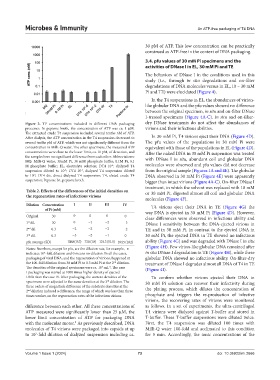
            Table 2. Effects of the differences of the initial densities on   or 30 mM Pi, digested almost all coil and globular DNA
            the regeneration rates of infectious virions
                                                               molecules (Figure 4F).
            Dilution Concentration   I  II    III    IV          T4 virions eject their DNA in TE (Figure  4G) the
                    of Pi (mM)                                 way DNA is ejected in 30 mM Pi (Figure 4D). However,
            Original   30       0      0      0       0        clear differences were observed in infectious ability and
            1  dil.    30       0      −1     −2      −3       DNase I sensitivity between the DNA-ejected virions in
             st
            2  dil.    0.3      −2     −2     −2      −2       TE and in 30 mM Pi. In contrast to the ejected DNA in
             nd
            3  dil.    0.3      −3     −2     −1      0        30 mM Pi, the ejected DNA in TE showed no infectious
             rd
            pfu average (SD)  100.0 (15.3) 73.6 (1.0) 124.3 (11.5) 184.5 (18.2)  ability (Figure 4G) and was degraded with DNase I in situ
            Notes: Numbers, except for pfu, are the dilution rate, for example, -n   (Figure 4H). Few virion-like globular DNA remained after
            indicates 10 -fold dilution and 0 means no dilution. In all the cases,   in situ DNase I degradation in TE (Figure 4H), while these
                    n
            packaging of viral DNA, and the regeneration of virions, happened at   globular DNA showed no infectious ability. On-filter-dry
            the 100-fold dilution from 30 mM Pi to 0.3 mM Pi at the 2  dilution.   treatment of DNase I degrades almost all DNA of T4 in TE
                                                 nd
            The densities of the original specimens were ca. 10  mL . The case   (Figure 4I).
                                               -1
                                            7
            I packaging was started at 1000 times higher density of ejected
            DNA than the case IV. After packaging, the content densities of the   To confirm whether virions ejected their DNA in
            specimens were adjusted to the same densities at the 3  dilution. The   30 mM Pi solution can recover their infectivity during
                                               rd
            three orders of magnitude difference of the substrate densities at the   the plating process, which dilutes the concentration of
            2  dilution induced a difference, the range of which was less than three
             nd
            times weaker, on the regeneration rates of the infectious virions.  phosphate and triggers the re-production of infective
                                                               virions, the recovering rates of virions were monitored
            difference between each other. All these concentrations of   as follows. In a set of experiments, the ultra-centrifuged
            ATP measured were significantly lower than 25 μM, the   T4 virions were dialyzed against T-buffer and stored in
            lower limit concentration of ATP for packaging DNA   T-buffer. These T-buffer suspensions were diluted twice.
            with the molecular motor.  As previously described, DNA   First, the T4 suspension was diluted 100  times with
                                 5
            molecules of T4 virions were packaged into capsids at up   Milli-Q water 100-fold and acclimated to this condition
            to 10 -fold dilution of dialyzed suspension including ca.   for 5  min. Accordingly, the ionic concentrations of the
                7
            Volume 1 Issue 1 (2024)                         73                               doi: 10.36922/mi.2666

