


Page 83 - MI-1-1
P. 83
Microbes & Immunity                                                      An ATP-free packaging of T4 DNA


                         A                       B                       C


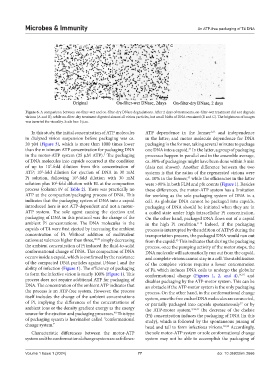
            Figure 6. A comparison between on-filter-wet and on-filter-dry DNase degradations. After 2 days of treatments, on-filter-wet treatment did not degrade
            virions (A and B), while on-filter-dry treatment digested almost all virion particles, but small blobs of DNA remained (B and C). The brightness of images
            was inverted for visuality. Scale bar: 5 μm.
              In this study, the initial concentration of ATP molecules   ATP dependence in the former  and independence
                                                                                           3,32
            in dialyzed virion suspension before packaging was ca.   in the latter; and motor molecule dependence for DNA
            20 pM (Figure 3), which is more than 1000 times lower   packaging in the former, taking several minutes to package
            than the minimum ATP concentration for packaging DNA   one DNA into a capsid.  In the latter, a group of packaging
                                                                                 41
            in the motor-ATP system (25 μM ATP).  The packaging   processes happen in parallel and in the ensemble average,
                                             5
            of DNA molecules into capsids occurred at the condition   ca. 80% of packagings might have been done within 3 min
            of up to 10 -fold dilution from this concentration of   (data not shown). Another difference between the two
                      7
            ATP; 10 -fold dilution for ejection of DNA in 30 mM   systems is that the ratios of the regenerated virions were
                   2
            Pi solution, following 10 -fold dilution with 30 mM   ca. 10% in the former,  while the efficiencies in the latter
                                  3
                                                                                 42
            solution plus 10 -fold dilution with EL at the compaction   were >90% in both FLM and pfu counts (Figure 1). Besides
                         2
            process (column IV of Table 2). There was practically no   these differences, the motor-ATP system has a limitation
            ATP at the compaction/packaging process of DNA. This   for working as the sole packaging system of DNA in a
            indicates that the packaging system of DNA into a capsid   cell. As globular DNA cannot be packaged into capsids,
            introduced here is not ATP-dependent and not a motor-  packaging of DNA should be initiated when they are in
            ATP system. The sole agent causing the ejection and   a coiled state under high intracellular Pi concentration.
            packaging of DNA in this protocol was the change of the   On the other hand, packaged DNA flows out of a capsid
            ambient  Pi  concentrations.  The  DNA  molecules  in  the   in the high Pi condition. 8-10  Indeed, if the packaging
            capsids of T4 were first ejected by increasing the ambient   process is interrupted by the addition of ATPγS during the
            concentration of Pi. Without addition of multivalent   transportation process, the packaged DNA would run out
            cations at valences higher than three, 38,39  simply decreasing   from the capsid.  This indicates that during the packaging
                                                                            43
            the ambient concentration of Pi induced the fluid-to-solid   process, once the pumping activity of the motor stops, the
            conformational change of DNA. This compaction of DNA   DNA molecule will automatically run out from the capsid,
            occurs inside a capsid, which is confirmed by the resistance   and complete virions cannot stay in a cell. The stabilization
            of the compacted DNA particles against DNase I and the   of the complete virions requires a lower concentration
            ability of infection (Figure 1). The efficiency of packaging   of Pi, which induces DNA coils to undergo the globular
            to form the infective virion is nearly 100% (Figure 1). This   conformational change (Figures  1,  2,  and  4), 14,15  and
            process does not require additional ATP for packaging of   disables packaging by the ATP-motor system. This can be
            DNA. The concentration of the ambient ATP indicates that   an obstacle if the ATP-motor system is the only packaging
            the process is an ATP-free system. However, the process   process. On the other hand, in the conformational change
            itself includes the change of the ambient concentrations   system, once the free ends of DNA molecules are connected,
            of Pi, implying the differences of the concentrations of   or partially packaged into capsids spontaneously  or by
                                                                                                       37
            ambient ions or the density gradient energy as the energy   the ATP-motor system, 3,32,37  the decrease of the chelate
            source for the ejection and packaging processes.  This type   (Pi) concentration induces the packaging of DNA (in this
                                                  40
            of packaging system is hereinafter called “conformational   study), which is followed by the spontaneous joining of
            change system.”                                    head and tail to form infectious virions. 32,33  Accordingly,
              Characteristic differences  between the motor-ATP   the sole motor-ATP system or sole conformational change
            system and the conformational change system are as follows:   system may not be able to accomplish the packaging of


            Volume 1 Issue 1 (2024)                         77                               doi: 10.36922/mi.2666

