


Page 71 - MI-1-2
P. 71
Microbes & Immunity                                                   Viral, bacterial, and protozoal diseases


                                                               Kogi State, Nigeria, who observed a 47% prevalence of
                                %   Prev.  12.3  15  15  15  10  typhoid infection. The variation in the results could be
                         Urinary tract   infections   No.   (+ve)  22  18  12  6  60  attributed to differences in the environmental conditions
                                                               of  the studied populations,  such  as poor hygiene that
                                                               leads to fecal contamination and a lack of access to
                                No.   screened  180  37.5  120  80  40  600  clean drinking water, as previously observed.  Evidence
                                                                                                    23
                                                               from this study indicates that the community is highly
                                                               vulnerable to typhoid infection disease, principally due to
                         High vaginal swab      %   No.   Prev.  (+ve)  30  60  6  44  22  60  12  45  90  contamination of the source of water to the community
                                                               (River Arun in Idanre), which could lead to the infection
                                                               of other individuals and deaths of the infected ones.
                                  screened
                                                                 The HBV infection rate of 20% in this study is, however,
                                No.
                                                200
                                       10
                                     80
                                             20
                                          50
                                                               higher than the 3.5 – 8.0% reported among HIV-positive
                                                               patients in Kogi State 26,27  and the 7.5% reported by Okolo and
                                  Prev.
                                             7.5
                                                6.3
                                                                      28
                                                               Omatola,  among apparently healthy individuals in North
                                %
                                          8
                         Helicobacter pylori      No.   (+ve)  2  3  8  6  20  Central Nigeria. Furthermore, the infection rate of 20%
                                       5
                                     5
                                                               reported for HBsAg in this study is lower than the findings of
                                                               Mbaawuaga et al.,  who observed 30% of HBV positivity in
                                                                             29
                                  screened
                                                               Lagos, Southern Nigeria. The differences in this study could
                                No.
                                          100
                                                300
                                     40
                                       60
                                             80
                                                               be attributed to differences in population selection.  People
                                                                                                       29
                                                               with this infection should be treated effectively to prevent
                                  Prev.
                                       26.7
                                     10
                                %
                                          20
                                                20
                                             30
                                                               further spread of HBsAg infection, which may lead to serious
                         Hepatitis B surface   antigen   No.   No.   (+ve)  screened  10  100  16  60  20  100  18  60  80  400  short- and long-term health implications for the populace.
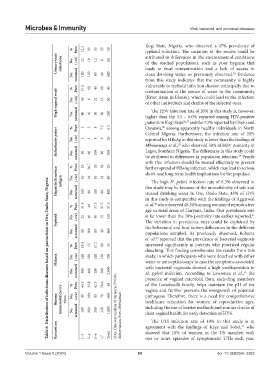
                     Table 8. Distribution of infectious diseases based on parturition in Ore, Ondo State, Nigeria
                                                                 The high H. pylori infection rate of 6.3% observed in
                                                               this study may be because of the unavailability of safe and
                                                               treated drinking water in Ore, Ondo State. 45% of HVS
                                                               et  al.  who observed 48.50% among women of reproductive
                                                                   30
                                %   Prev.  31.3  40  37.5  37.5  37.5  in this study is comparable with the findings of Aggarwal
                                                               age in rural areas of Haryana, India. Our prevalence rate
                                                                                                            31
                         Typhoid      No.   (+ve)  25  40  30  15  150  is far lower than the 78% positivity rate earlier reported.
                                                               The variation in prevalence rates could be explained by
                                No.   screened  80  100  80  40  400  the behavioral and host factors differences in the different
                                                               populations sampled. As previously observed, Roberta
                                                               et  al.  reported that the prevalence of bacterial vaginosis
                                                                   32
                                %   Prev.  53.4  55  57.2  60  35  increased significantly in patients who practiced regular
                                                               douching. This finding corroborates the results from this
                         Malaria      No.   (+ve)  160  220  160  120  700  study, in which participants who were douched with either
                                                               water or antiseptics/soaps to ease the symptoms associated
                                No.   screened  300  400  280  200  2,000  with bacterial vaginosis showed a high predisposition to
                                                               H. pylori infection. According to Lawrence  et  al.,  the
                                                                                                         31
                                                               presence of vaginal microbial flora, including members
                                                               of the  Lactobacilli family,  helps maintain the pH of the
                           immunodeficiency   %   No.   Prev.  (+ve)  44.5  80  35.8  100  42.5  85  58.4  70  40  400  vagina and further prevents the overgrowth of potential
                         Human   virus  No.   screened  180  280  200  120  1,000 Note: One-way analysis of variance: P=0.00.  healthcare education for women of reproductive ages,
                                                               pathogens. Therefore, there is a need for comprehensive
                                                               including the use of barrier methods and routine checks of
                                                               their vaginal health for early detection of HVS.
                                                                 The UTI infection rate of 10% in this study is in
                         Parturition  1–2  3–4  5–6  >7  Total  Abbreviation: Prev.: Prevalence.  agreement with the findings of Kaye and Sobel,  who
                                                                                                        33
                                                               showed  that  10%  of  women  in  the  US  manifest  with
                                                               one or more episodes of symptomatic UTIs each year.
            Volume 1 Issue 2 (2024)                         65                               doi: 10.36922/mi.3283

