


Page 69 - MI-2-2
P. 69
Microbes & Immunity                                                Phylogenetic analysis of HPV16 L1 in Asia


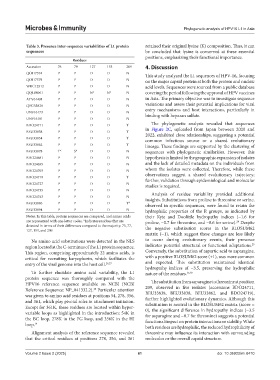
            Table 3. Presence inter-sequence variabilities of L1 protein   retained their original lysine (K) composition. Thus, it can
            sequences                                          be concluded that lysine is conserved at these essential
                                                               positions, emphasizing their functional importance.
                                Residues
            Accession     76     79    127     153     209     4. Discussion
            QOI17574      P      P     D       D       N       This study analyzed the L1 sequences of HPV-16, focusing
            QOI17579      P      P     D       D       N       on the major capsid protein at both the protein and nucleic
            WKC12512      P      P     D       D       N       acid levels. Sequences were sourced from a public database
            QQL88061      P      P     N*      N*      N       covering the period following the approval of HPV vaccines
            AYV61481      P      P     D       D       N       in Asia. The primary objective was to investigate sequence
            QEG53826      P      P     D       D       N       variations and assess their potential implications for viral
            UNF16173      P      P     D       D       N       entry mechanisms and host interactions, particularly in
                                                               binding with heparan sulfate.
            UNF16181      P      P     D       D       N
            BDO24711      P      P     D       D       T         The phylogenetic analysis revealed that sequences
            BEU33838      P      P     D       D       T       in  Figure  2C, uploaded from Japan between 2020 and
                                                               2022, exhibited close relationships, suggesting a potential
            BEU33854      P      P     D       D       T       common infectious source or a shared evolutionary
            BEU33862      P      P     D       D       T       lineage. These findings are supported by the clustering of
            BEU33878      T*     S*    D       D       N       sequences with phylogenetic similarities. However, this
            BDO24681      P      P     D       D       N       hypothesis is limited by the geographic expansion of isolates
            BDO24695      P      P     D       D       N       and the lack of detailed metadata on the individuals from
            BDO24703      P      P     D       D       N       whom the isolates were collected. Therefore, while these
            BDO24719      P      P     D       D       T       observations  suggest  a  shared  evolutionary  trajectory;
                                                               further, validation through epidemiological and molecular
            BDO24727      P      P     D       D       N       studies is required.
            BDO24735      P      P     D       D       N
                                                                 Analysis  of  residue  variability  provided  additional
            BDO24743      P      P     D       D       N       insights. Substitutions from proline to threonine or serine,
            BEU33886      P      P     D       D       T*      observed in specific sequences, were found to retain the
            BEU33894      P      P     D       D       N       hydrophilic properties of the R groups, as indicated by
            Notes: In this table, protein sequences are compared, and amino acids   their Kyte and Doolittle hydropathy indices (−1.6 for
            are represented with one-letter codes. *Indicates residues that are   proline, −0.7 for threonine, and −0.6 for serine).  Despite
                                                                                                      29
            detected in terms of their differences compared to the majority: 75, 77,   the negative substitution scores in the BLOSUM62
            127, 153, and 209.
                                                               matrix (−1), which suggest these changes are less likely
              No amino acid substitutions were detected in the NLS   to occur during evolutionary events, their presence
                                                                                                            25
            region located at the C-terminus of the L1 protein sequence.   indicates potential structural or functional adaptations.
            This region, comprising approximately 22 amino acids, is   Conversely, the substitution of aspartic acid to asparagine,
            critical for recruiting karyopherin, which facilitates the   with a positive BLOSUM62 score (+1), was more common
            entry of the viral genome into the host cell. 26,27  and expected. This substitution maintained identical
                                                               hydropathy indices of −3.5, preserving the hydrophilic
              To  further  elucidate  amino  acid  variability,  the  L1   nature of the residues. 25,29
            protein sequence was thoroughly compared with the
            HPV16 reference sequence available on NCBI (NCBI     The substitution from asparagine to threonine at position
            Reference Sequence: NP_041332.2).  Particular attention   209, observed in five isolates (accessions BDO24711,
                                         28
            was given to amino acid residues at positions 54, 278, 356,   BEU33838, BEU33838, BEU33862, and BDO24719),
                                                               further highlighted evolutionary dynamics. Although this
            and 361, which play pivotal roles in attachment initiation.   substitution is neutral in the BLOSUM62 matrix (score =
            Except for 361K, these residues are located within hyper-  0), the significant difference in hydropathy indices (−3.5
            variable loops as highlighted in the introduction: 54K in   for asparagine and −0.7 for threonine) suggests a potential
            the BC loop, 278K in the FG loop, and 356K in the HI   functional impact on protein interactions or stability. While
            loop. 14
                                                               both residues are hydrophilic, the reduced hydrophilicity of
              Alignment analysis of the reference sequence revealed   threonine may influence its interaction with surrounding
            that the critical residues at positions 278, 356, and 361   molecules or the overall capsid structure.


            Volume 2 Issue 2 (2025)                         61                               doi: 10.36922/mi.8410

