


Page 85 - MI-2-3
P. 85
Microbes & Immunity                                              Carotene and immunity to COVID-19 vaccine


            A                     B                            A                     B


            C                      D


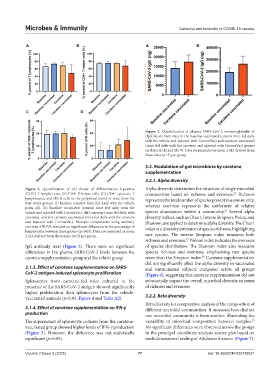
                                                               Figure  3.  Quantification of plasma SARS-CoV-2 immunoglobulin G
                                                               (IgG) levels from mice in the baseline vaccinated (control mice fed daily
                                                               with the vehicle and injected with CoronaVac) and carotene vaccinated
                                                               (mice fed daily with the carotene and injected with CoronaVac) groups
                                                               on days (A) 42 and (B) 70. Data are presented as mean ± SD, derived from
                                                               three mice (n=3) per group.

                                                               3.2. Modulation of gut microbiota by carotene
                                                               supplementation
                                                               3.2.1. Alpha diversity

            Figure  2. Quantification of (A) cluster of differentiation 3-positive   Alpha diversity determines the structure of single microbial
            (CD3 ) T lymphocytes, (B) CD4  T-helper cells, (C) CD8  cytotoxic T   communities based on richness and evenness.  Richness
                                 +
                                                                                                    25
               +
                                                  +
            lymphocytes, and (D) B cells in the peripheral blood of mice from the   represents the total number of species present in a community,
            four study groups: (i) baseline (control mice fed daily with the vehicle
            palm oil), (ii) baseline vaccinated (control mice fed daily with the   whereas  evenness represents the  uniformity of relative
                                                                                                25
            vehicle and injected with CoronaVac), (iii) carotene (mice fed daily with   species abundances within a community.  Several alpha
            carotene), and (iv) carotene vaccinated (mice fed daily with the carotene   diversity indices, such as Chao1, Inverse Simpson, Pielou, and
            and injected with CoronaVac). Multiple comparisons using ordinary   Shannon, are applied to determine alpha diversity. The Chao1
            one-way ANOVA revealed no significant differences in the percentage of   index is a diversity estimator of species richness, highlighting
            lymphocytes between these groups (p>0.05). Data are presented as mean
            ± SD, derived from three mice (n=3) per group.     rare  species.  The  inverse  Simpson  index  measures  both
                                                               richness and evenness.  Pielou’s index indicates the evenness
                                                                                25
            IgG antibody level (Figure  3). There were no significant   of  species  distribution.  The  Shannon  index  also  measures
            differences in the plasma SARS-CoV-2 levels between the   species richness and evenness, emphasizing rare species
            carotene supplementation group and the vehicle group.  more than the Simpson index.  Carotene supplementation
                                                                                       25
                                                               did not significantly affect the alpha diversity in vaccinated
            3.1.3. Effect of carotene supplementation on SARS-  and unvaccinated subjects compared across all groups
            CoV-2 antigen-induced splenocyte proliferation     (Figure 6), suggesting that carotene supplementation did not
            Splenocytes from carotene-fed mice cultured in the   substantially impact the overall microbial diversity in terms
            presence of the SARS-CoV-2 antigen showed significantly   of richness and evenness.
            higher proliferation than splenocytes from the vehicle-
            vaccinated animals (p<0.05, Figure 4 and Table A2).  3.2.2. Beta diversity
                                                               Beta diversity is a comparative analysis of the composition of
            3.1.4. Effect of carotene supplementation on IFN-γ   different microbial communities. It measures how distinct
            production                                         one microbial community is from another, illustrating the
            The supernatant of splenocyte cultures from the carotene-  variability of microbial composition between samples.
                                                                                                            25
            vaccinated group showed higher levels of IFN-γ production   No significant differences were observed across the groups
            (Figure  5). However, the difference was not statistically   in the principal coordinate analysis scatter plot based on
            significant (p>0.05).                              multidimensional scaling of Aitchison distance (Figure 7).


            Volume 2 Issue 3 (2025)                         77                           doi: 10.36922/MI025110021

