


Page 89 - MI-2-3
P. 89
Microbes & Immunity                                              Carotene and immunity to COVID-19 vaccine


                         A                                         B


                         C


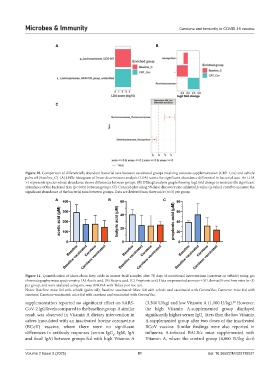
            Figure 10. Comparison of differentially abundant bacterial taxa between vaccinated groups receiving carotene supplementation (CRT_Cov) and vehicle
            palm oil (Baseline_C). (A) LEfSe histogram of linear discriminant analysis (LDA) scores for significant abundance differential in bacterial taxa. An LDA
            >4 represents species whose abundance shows differences between groups. (B) DESeq2 analysis graph showing log2 fold change to measure the significant
            abundance of the bacterial taxa (p< 0.05) between groups. (C) Corncob plot using 5% false discovery rate-adjusted p-value (q-value) cutoff to measure the
            significant abundance of the bacterial taxa between groups. Data are derived from three mice (n=3) per group.
                         A                     B                      C


            Figure 11. Quantification of short-chain fatty acids in mouse fecal samples after 70 days of nutritional interventions (carotene or vehicle) using gas
            chromatography-mass spectrometry. (A) Acetic acid. (B) Butyric acid. (C) Propionic acid. Data are presented as mean ± SD, derived from three mice (n=3)
            per group, and were analyzed using one-way ANOVA with Tukey post hoc test.
            Notes: Baseline: mice fed with vehicle (palm oil); Baseline vaccinated: Mice fed with vehicle and vaccinated with CoronaVac; Carotene: mice fed with
            carotene; Carotene vaccinated: mice fed with carotene and vaccinated with CoronaVac.
            supplementation reported no significant effect on SARS-  (3,300 U/kg) and low Vitamin A (1,100 U/kg).  However,
                                                                                                    29
            CoV-2 IgG levels compared to the baseline group. A similar   the high Vitamin A-supplemented group displayed
            result was observed in Vitamin A dietary intervention in   significantly higher serum IgG  titers than the low Vitamin
                                                                                       1
            calves inoculated with an inactivated bovine coronavirus   A-supplemented group after two doses of the inactivated
            (BCoV) vaccine, where there were no significant    BCoV vaccine. Similar findings were also reported in
            differences in antibody responses (serum IgG , IgM, IgA   influenza  A-infected  BALB/c  mice  supplemented  with
                                                 2
            and fecal IgA) between groups fed with high Vitamin A   Vitamin A, where the control group (4,000  IU/kg diet)

            Volume 2 Issue 3 (2025)                         81                           doi: 10.36922/MI025110021

