


Page 86 - MI-2-3
P. 86
Microbes & Immunity                                              Carotene and immunity to COVID-19 vaccine


                                                               3.2.3. Taxonomic abundance cluster heatmap

                                                               The composition of the microbial community was
                                                               visualized  with  a  composition  heatmap  (Figure  8).  The
                                                               Y-axis represents the bacterial taxa, and the X-axis
                                                               represents samples. The colour of each intersection depicts
                                                               the taxon abundance in the sample.
                                                               3.2.4. Differential abundance analysis
                                                               Differential abundance analysis is carried out to determine
                                                               the differences between microbial communities. In this
                                                               project, multiple differential abundance analysis methods
                                                               (e.g., DESeq2, LEfSe, and Corncob) were utilized to cross-
                                                               validate results as different methods varied in statistical
                                                               assumptions regarding data distribution, sparsity, and the
                                                               handling of zero inflation.  Applying multiple methods
                                                                                     26
                                                               yielded overlapping and distinct sets of differentially
                                                               abundant taxa. The differences can be attributed to the
                                                               varying statistical assumptions. Overlapping taxa suggest a
                                                               high level of confidence in the biological relevance of these
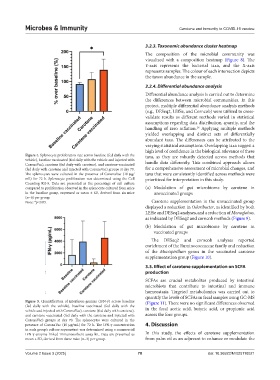
            Figure 4. Splenocyte proliferation rate across baseline (fed daily with the   taxa, as they are robustly detected across methods that
            vehicle), baseline vaccinated (fed daily with the vehicle and injected with
            CoronaVac), carotene (fed daily with carotene), and carotene vaccinated   handle data differently. This combined approach allows
            (fed daily with carotene and injected with CoronaVac) groups at day 70.   for a comprehensive assessment of microbial changes, and
            The splenocytes were cultured in the presence of CoronaVac (10  µg/  taxa that were consistently identified across methods were
            mL) for 72  h. Splenocyte proliferation was determined using the Cell   prioritized for interpretation in this study.
            Counting Kit-8. Data are presented as the percentage of cell culture
            compared to proliferation observed in the splenocyte cultured from mice   (a)  Modulation of gut microbiome by carotene in
            in the baseline group, expressed as mean ± SD, derived from six mice   unvaccinated groups
            (n=6) per group.
            Note: *p<0.05.                                       Carotene supplementation in the unvaccinated group
                                                               displayed a reduction in Odoribacter, as identified by both
                                                               LEfSe and DESeq2 analyses, and a reduction of Monoglobus,
                                                               as indicated by DESeq2 and corncob methods (Figure 9).
                                                               (b)  Modulation of gut microbiome by carotene in
                                                                  vaccinated groups
                                                                 The DESeq2 and corncob analyses reported
                                                               enrichment of the Ruminococcaceae family and reduction
                                                               of  the  Mucispirillum  genus  in  the  vaccinated  carotene
                                                               supplementation group (Figure 10).
                                                               3.3. Effect of carotene supplementation on SCFA
                                                               production
                                                               SCFAs are crucial metabolites produced by intestinal
                                                               microbiota that contribute to intestinal and immune
                                                               homeostasis. Targeted metabolomics was carried out to
                                                               quantify the levels of SCFAs in fecal samples using GC-MS
            Figure  5.  Quantification of  interferon-gamma (IFN-γ) across baseline   (Figure 11). There were no significant differences observed
            (fed daily with the vehicle), baseline vaccinated (fed daily with the   in the fecal acetic acid, butyric acid, or propionic acid
            vehicle and injected with CoronaVac), carotene (fed daily with carotene),
            and carotene vaccinated (fed daily with the carotene and injected with   across the four groups.
            CoronaVac) groups at day 70. The splenocytes were cultured in the
            presence of CoronaVac (10 µg/mL) for 72 h. The IFN-γ concentration   4. Discussion
            in each group’s culture supernatant was determined using a commercial
            IFN-γ enzyme-linked immunosorbent assay kit. Data are presented as   In this study, the effects of carotene supplementation
            mean ± SD, derived from three mice (n=3) per group.  from palm oil as an adjuvant to enhance or modulate the


            Volume 2 Issue 3 (2025)                         78                           doi: 10.36922/MI025110021

