


Page 78 - MI-2-4
P. 78
Microbes & Immunity                                             Dietary emulsifiers affect the presence of AIEC


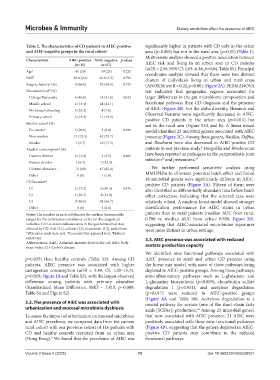
            Table 2. The characteristics of CD patients in AIEC‑positive   significantly higher in patients with CD only in the urban
            and AIEC‑negative groups in the rural cohort       area (p=0.003) but not in the rural area (p=0.31) (Table 1).
                                                               Multivariate analysis showed a positive association between
            Characteristic    AIEC‑positive  AIEC‑negative  p‑value
                                 (n=15)     (n=57)             AIEC risk and living in an urban area in CD patients
            Age †                45 (20)    39 (23)  0.220     (aOR = 2.56, 95% CI: 1.03–6.38, p=0.04, Table S5). Principal
                                                               coordinates analysis showed that there were two distinct
            BMI †               20.8 (4.6)  20.8 (5.3)  0.792  clusters of individuals living in urban and rural areas
            Surgery history  (%)  9 (60.0)  29 (50.9)  0.735   (ANOSIM test R = 0.22, p=0.001, Figure 2A). PERMANOVA
                      ‡
                      §
            Education level  (%)                               test indicated that geographic regions accounted for
             College/University  6 (40.0)  18 (31.6)  0.023    larger differences in the gut microbiome composition and
             Middle school       2 (13.3)  24 (42.1)           functional pathways than CD diagnosis and the presence
             No formal schooling  5 (33.3)  4 (7.0)            of AIEC (Figure 2B). For the alpha diversity, Shannon and
             Primary school      2 (13.3)  11 (19.3)           Observed Features were significantly decreased in AIEC-
                                                               positive CD patients in the urban area (p=0.011) but
            Smoker status  (%)                                 not in the rural area (Figure S3A and B). A linear mixed
                     §
             Ex-smoker           3 (20.0)   5 (8.8)  0.400     model identified 23 microbial genera associated with AIEC
             Non-smoker         11 (73.3)  42 (73.7)           presence (Figure 2C). Among these genera, Bacillus, Delftia,
             Smoker              1 (6.7)   10 (17.5)           and  Roseburia were also decreased in AIEC-positive CD
                                                                                       8
            Alcohol consumption  (%)                           patients in our previous study.  Finegoldia and Rhodococcus
                          §
             Current drinker     2 (12.3)   2 (3.5)  0.481     have been reported as pathogens in the periprosthetic joint
                                                               infection  and pneumonia. 24
                                                                      23
             Former drinker      1 (6.7)    7 (12.3)
             Lifetime abstainer  12 (80)   47 (82.4)             We further performed sensitivity analysis using
             Other                0 (0)     1 (1.8)            MMUPHin to eliminate potential batch effect and found
            CD Location §                                      16 microbial genera were significantly different in AIEC-
                                                               positive CD patients (Figure  3A). Fifteen of them were
             L1                  2 (13.3)   6 (10.5)  0.476    also identified as differentially abundant taxa before batch
             L2                  4 (26.7)   8 (14.0)           effect correction, indicating that the selected taxa were
             L3                  9 (60.0)  38 (66.7)           relatively robust. A random forest model showed stronger
             Other                0 (0)     5 (8.8)            classification performance  for  AIEC status in  urban
            Notes: The number in each cell denotes the median (interquartile   patients than in rural patients (median AUC from rural:
            range) for the continuous variables or n (%) for the categorical   0.700  vs. median AUC from urban: 0.850,  Figure  3B),
            variables. CD Location indicates areas in the gastrointestinal tract   suggesting that AIEC-associated microbiome signatures
            affected by CD: ileal (L1), colonic (L2), ileocolonic (L3), and others.   were more distinct in urban settings.
                              ‡
                                                 §
            † Wilcoxon rank sum test;  Pearson’s Chi-squared test;  Fisher’s
            exact test.                                        3.3. AIEC presence was associated with reduced
            Abbreviations: AIEC: Adherent-invasive Escherichia coli; BMI: Body   acetate production capacity
            mass index; CD: Crohn’s disease.
                                                               We identified nine functional pathways associated with
            p=0.035) than healthy controls (Table S2). Among CD   AIEC presence in rural and urban CD patients using
            patients, AIEC presence was associated with higher   the linear mix model, with most of these pathways being
            carrageenan consumption (aOR = 4.49, CI: 1.28–15.75,   depleted in AIEC-positive groups. Among these pathways,
            p=0.019, Figure 1B and Table S3), with the largest observed   anti-inflammatory pathways such as L-glutamate and
            difference among patients with primary education   L-glutamine biosynthesis (p=0.009),  chondroitin sulfate
            (Standardized Mean Difference, SMD = 3.810,  p=0.008;   degradation  I  (p=0.031),  and  acetylene  degradation
            Table S4 and Figure S2).                           (p=0.017) were reduced in AIEC-positive groups
                                                               (Figure  4A and Table S6). Acetylene degradation is a
            3.2. The presence of AIEC was associated with      crucial pathway for acetate (one of the short-chain fatty
            urbanization and mucosal microbiota dysbiosis      acids [SCFAs]) production.  Among 23 microbial genera
                                                                                     25
            To assess the impact of urbanization on mucosal microbiota   that were associated with AIEC presence, 21 AIEC were
            and AIEC prevalence, we compared data from the current   positively associated with these nine functional pathways
            rural cohort with our previous cohort of 116 patients with   (Figure 4B), suggesting that the genera depleted in AIEC-
            CD and healthy controls recruited from an urban area   positive CD patients may contribute to the reduced
            (Hong Kong).  We found that the prevalence of AIEC was   functional pathways.
                       8

            Volume 2 Issue 4 (2025)                         70                           doi: 10.36922/MI025230051

