


Page 80 - MI-2-4
P. 80
Microbes & Immunity                                             Dietary emulsifiers affect the presence of AIEC


            A
                                                       C


            B


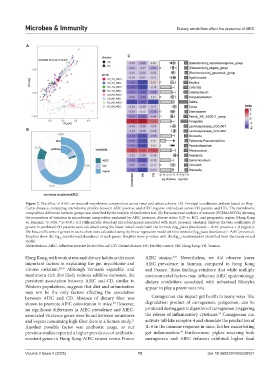
            Figure 2. The effect of AIEC on mucosal microbiome composition across rural and urban cohorts. (A) Principal coordinates analysis based on Bray–
            Curtis distance, comparing microbiome profiles between AIEC-positive and AIEC-negative individuals across CD patients and HCs. The microbiome
            composition difference between groups was identified by the analysis of similarities test. (B) Permutational analysis of variance (PERMANOVA) showing
            the proportion of variation in microbiome composition explained by AIEC presence, disease status (CD vs. HC), and geographic region (Hong Kong
            vs. Yunnan). *p<0.05, **p<0.001. (C) Differentially abundant microbial genera associated with AIEC presence. Heatmap displays the beta coefficients of
            genera in combined CD patients were calculated using the linear mixed model with the formula (log (taxa abundance) ~ AIEC presence + (1|region)).
                                                                             10
            The beta coefficients of genera in each cohort were calculated using the linear regression model with the formula (log (taxa abundance) ~ AIEC presence).
                                                                                     10
            Boxplots show the log -transformed abundance of each genus. Boxplots show p-values with the log  transformation identified from the linear mixed

                          10
                                                                             10
            model.
            Abbreviations: AIEC: Adherent-invasive Escherichia coli; CD: Crohn’s disease; HC: Healthy control; HK: Hong Kong; YN: Yunnan.
            Hong Kong, with work stress and dietary habits as the most   AIEC strains.  Nevertheless, we did observe lower
                                                                          8,32
            important factors in explaining the gut mycobiome and   AIEC prevalence in Yunnan, compared to Hong Kong
            virome variation. 28,29  Although Yunnan’s vegetable-  and   and France. These findings reinforce that while multiple
            mushroom-rich diet likely reduces additive exposure, the   environmental factors may influence AIEC epidemiology,
            persistent association between AIEC and CD, similar to   dietary  emulsifiers  associated  with  urbanized  lifestyles
            Western populations, suggests that diet and urbanization   appear to play a prominent role.
            may not be the only factors affecting the association
            between AIEC and CD. Absence of dietary fiber was    Carrageenan can impact gut health in many ways. The
            shown to promote AIEC colonization in mice.  However,   degradation product of carrageenan, poligeenan, can be
                                                 30
            no significant differences in AIEC prevalence and AIEC-  produced during gastric digestion of carrageenan, triggering
                                                                                              33
            associated virulence genes were found between omnivores   the release of inflammatory cytokines.  Carrageenan can
            and vegans consuming high-fiber diets in a human study.    activate toll-like receptor-4 and stimulate the production of
                                                         31
            Another possible factor was antibiotic usage, as our   IL-6 in the immune response in mice, further exacerbating
                                                                              34
            previous studies reported a higher prevalence of antibiotic-  gut inflammation.  Furthermore, piglets receiving both
            resistant genes in Hong Kong AIEC strains versus France   carrageenan and  AIEC infusion  exhibited higher fecal

            Volume 2 Issue 4 (2025)                         72                           doi: 10.36922/MI025230051

