


Page 81 - MI-2-4
P. 81
Microbes & Immunity                                             Dietary emulsifiers affect the presence of AIEC


                         A


                                                               B


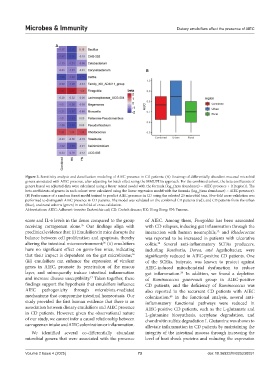
            Figure 3. Sensitivity analysis and classification modeling of AIEC presence in CD patients. (A) Heatmap of differentially abundant mucosal microbial
            genera associated with AIEC presence, after adjusting for batch effect using the MMUPHin approach. For the combined cohort, the beta coefficients of
            genera based on adjusted data were calculated using a linear mixed model with the formula (log (taxa abundance) ~ AIEC presence + (1|region)). The
                                                                          10
            beta coefficients of genera in each cohort were calculated using the linear regression model with the formula (log (taxa abundance) ~ AIEC presence).
                                                                                     10
            (B) Performance of a random forest model trained to predict AIEC presence in CD using the selected 23 microbial taxa. Five-fold cross-validation was
            performed to distinguish AIEC presence in CD patients. The model was validated on the combined CD patients (red), and CD patients from the urban
            (blue), and rural cohorts (green) in each fold of cross-validation.
            Abbreviations: AIEC: Adherent-invasive Escherichia coli; CD: Crohn’s disease; HK: Hong Kong; YN: Yunnan.
            score and IL-6 levels in the ileum compared to the group   of AIEC. Among them,  Finegoldia has been associated
            receiving carrageenan alone.  Our findings align with   with CD relapses, inducing gut inflammation through the
                                    35
            preclinical evidence that: (i) Emulsifiers in mice disrupts the   interaction with human neutrophils,   and Rhodococcus
                                                                                             37,
            balance between cell proliferation and apoptosis, thereby   was reported to be increased in patients with ulcerative
            altering the intestinal microenvironment;  (ii) emulsifiers   colitis.  Several anti-inflammatory SCFAs producers,
                                             36
                                                                    38
            have no significant effect on germ-free mice, indicating   including  Roseburia,  Dorea,  and Agathobacter, were
                                                         16
            that  their  impact  is  dependent  on  the  gut  microbiome;    significantly reduced in AIEC-positive CD patients. One
            (iii)  emulsifiers  can  enhance  the  expression  of  virulent   of the SCFAs, butyrate, was known to protect against
            genes in AIEC, promote its penetration of the mucus   AIEC-induced mitochondrial dysfunction to  reduce
            layer, and subsequently induce intestinal inflammation   gut inflammation.  In addition, we found a depletion
                                                                              39
            and increase disease susceptibility.  Taken together, these   of  Ruminococcus gauvreauii group in AIEC-positive
                                       17
            findings support the hypothesis that emulsifiers influence   CD patients, and the deficiency of  Ruminococcus  was
            AIEC   pathogenicity  through  microbiota-mediated  also reported in the recurrent CD patients with AIEC
            mechanisms that compromise intestinal homeostasis. Our   colonization.   In  the  functional  analysis,  several  anti-
                                                                         40
            study provided the first human evidence that there is an   inflammatory functional pathways were reduced in
            association between dietary emulsifiers and AIEC presence   AIEC-positive CD patients, such as the L-glutamate and
            in CD patients. However, given the observational nature   L-glutamine biosynthesis, acetylene degradation, and
            of our study, we cannot infer a causal relationship between   chondroitin sulfate degradation I. Glutamine was shown to
            carrageenan intake and AIEC colonization or inflammation.  alleviate inflammation in CD patients by maintaining the

              We identified several co-differentially abundant   integrity of the intestinal mucosa through increasing the
            microbial genera that were associated with the presence   level of heat shock proteins and reducing the expression


            Volume 2 Issue 4 (2025)                         73                           doi: 10.36922/MI025230051

