


Page 27 - MSAM-2-2
P. 27
Materials Science in Additive Manufacturing                         Water repellence via pinecone structures


                         A                         B                      C


                                    Figure 1. Schematic of structures: (A) “CALM”; (B) cone; and (C) pinecone.

                                                               A


                                                               B


                                                               C
            Figure 2. The schematic two-photon polymerization fabrication process
            set-up.

                    A

                                                               D


                    B
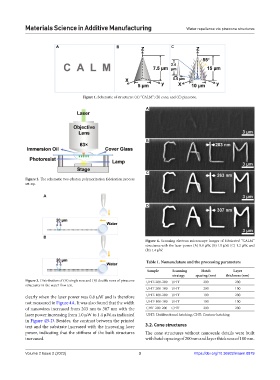
                                                               Figure 4. Scanning electron microscope images of fabricated “CALM”
                                                               structures with the laser power (A) 0.8 μW, (B) 1.0 μW, (C) 1.2 μW, and
                                                               (D) 1.4 μW.

                                                               Table 1. Nomenclature and the processing parameters
                                                                Sample    Scanning     Hatch        Layer
                                                                          strategy  spacing (nm)  thickness (nm)
            Figure 3. Distribution of (A) single row and (B) double rows of pinecone   UHT-200-200  UHT  200  200
            structures in the water flow test.
                                                               UHT-200-100  UHT        200           100
            clearly when the laser power was 0.8 μW and is therefore   UHT-100-200  UHT  100         200
            not measured in Figure 4A. It was also found that the width   UHT-100-100  UHT  100      100
            of nanowires increased from 203 nm to 307 nm with the   CHT-200-200  CHT   200           200
            laser power increasing from 1.0 μW to 1.4 μW, as indicated   UHT: Unidirectional hatching; CHT: Contour hatching
            in Figure 4B-D. Besides, the contrast between the printed
            text and the substrate increased with the increasing laser   3.2. Cone structures
            power, indicating that the stiffness of the built structures   The cone structures without nanoscale details were built
            increased.                                         with hatch spacing of 200 nm and layer thickness of 100 nm.


            Volume 2 Issue 2 (2023)                         3                       https://doi.org/10.36922/msam.0879

