


Page 29 - MSAM-2-2
P. 29
Materials Science in Additive Manufacturing                         Water repellence via pinecone structures


            that the surface roughness is more dependent on the hatch   The velocity of water expansion was calculated as 25.0 μm/s
            spacing, and  a  smooth  surface  was  obtained  with  the   from point B0 in Figure 9A to point F0 in Figure 9E. The
            scanning strategy UHT-100-100.                     detailed flow process can be referred to in Videoclip S1.
              An alternative method to improve the surface quality   One or two rows of pinecone structures were fabricated,
            of the structures is to optimize the scanning strategy. The   with  a total  of  40 pinecone structures in  each  row. The
            SEM image of the sample fabricated using CHT-200-200   optimum parameters of UHT-100-100 2.2 μW were used.
                                                                                             @
            strategies with laser power 2.2 μW is shown in Figure 7.   The water droplets were deposited from the right side of the
            Contour  hatching  fabrication assures  a smooth surface,   row, as shown in Figure 3. The optical microscopy images of
            even with a large hatch spacing and layer thickness.  water flow captured along a horizontal direction at different
                                                               timing for the single row pinecone structures are shown in
            3.3. Pinecone structures and the tuned water flow  Figure 10. When the liquid was in contact with the pinecone
            The contour scanning strategy, small hatch spacing, and   structures, a depressed area at the fluid front showed up, as
            layer thickness are conducive to fabricating smooth surfaces   marked by the yellow circle area of Figure 10B. As the fluid
            of 3D structures. However, contour scanning is inferior to   moved forward, the depressed area was always there until
            unidirectional scanning when fabricating pinecone structures.   the water completely submerged the pinecone structures,
            Figure 8A shows that the trunk cone can be well printed, while   which took a total time of 45 s. The corresponding water
            the branched cones are small and broken. With unidirectional   flow velocity was about 17.8  μm/s. It shows good water
            scanning (Figure 8B), the branched cones are solid despite the   repellence of the pinecone structures. Similar phenomena
            distortion. This may be due to the lack of support.  were observed in the case of two rows of pinecone structures
              To evaluate the water repellence of the printed structures,   (Figure  11). The depression area in  Figure  11C is larger
            the fluid flow test was performed. A  cover-glass slide   compared to the single-row pinecone structures. The total
            deposited  with  a photoresist was  cleaned with the same   time the water to flow from the right to the left side was 110
            development procedure and tested as a benchmark. The   s, and the average velocity was 7.2 μm/s. The detailed flow
            optical microscopy images of water flow captured along a   process can be referred to in Videoclips S2 and S3. It shows
            horizontal direction at different timing are shown in Figure 9.   that the  double-row structures  exhibit excellent water-
                                                               repellent performance. Therefore, the number of pinecone
                                                               structures can determine the water repellence, which, in
                                                               turn, regulates the tunability of the fluid velocity.
                                                               4. Discussion

                                                               Fabrication of structures with high dimensional accuracy and
                                                               good surface quality is desirable. Both requirements rely on
                                                               the voxel size and its arrangement. The TPP process occurs
                                                               when the polymerization threshold is achieved. The laser
                                                               dose must be high enough to overcome this threshold, and at
                                                               the same time, it influences the size of the voxel volume [17,27,28] .
                                                               To obtain a small feature size of the fabrication, limited
                                                               voxel sizes are usually employed using close-to-threshold
                                                               laser power [29,30] . The reduction of the TPP threshold under
                                                               high NA is a promising strategy nowadays to achieve high
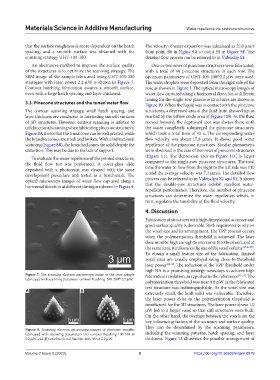
            Figure 7. The scanning electron microscope image of the cone sample   fabrication resolution, as reported in the references [31-33] . The
            fabricated with scanning parameter contour hatching-200-200  2.2 μW.
                                                   @
                                                               polymerization threshold was near 0.8 μW as the fabricated
                                                               text structure was indistinguishable. As the voxel size was
            A                      B
                                                               extremely small, the built solid was vulnerable. Therefore,
                                                               the laser power close to the polymerization threshold is
                                                               insufficient  for the 3D structures. The laser power above 1.0
                                                               μW led to a larger voxel so that stiff structures were built.
                                                               On the other hand, the overlaps between the voxels are the
                                                               key influencing factors of the accuracy and surface quality.
                                                               They can be determined by the scanning parameters,
            Figure  8. Scanning electron microscope images of pinecone samples
            fabricated with scanning parameters (A) contour hatching-100-100 @   including  the  scanning  patterns,  hatch  spacing,  and  layer
            2.2 μW and (B) unidirectional hatchin-100-100 @ 2.2 μW.  thickness. Figure 12 illustrates the possible arrangement of


            Volume 2 Issue 2 (2023)                         5                       https://doi.org/10.36922/msam.0879

