


Page 37 - MSAM-2-2
P. 37
Materials Science in Additive Manufacturing                  Tensile and fatigue properties of Ti6Al4V SLM parts


                                                               testing machine. Tensile loading graphs can be obtained
                                                               from the software. Various properties such as true stress
                                                               and true strain can be obtained as well.

                                                                 Other properties such as the elastic modulus (E), yield
                                                               stress at 0.2% of elongation (σ y), UTS and % elongation at
                                                               point of fracture was derived from the stress-strain curves
                                                               after the raw data were obtained. Stress-strain curves for
                                                               each specimen were used to understand the effects of the
                                                               three process parameters on tensile strength.

                                                               2.4. Fatigue property measurements
                                                               Fatigue testing was performed according to ASTM E466
                                                               standard  with Shimadzu Servo-Pulser Fatigue Test
                                                                      [30]
                                                               Machine. All the tests were performed in the ambient air
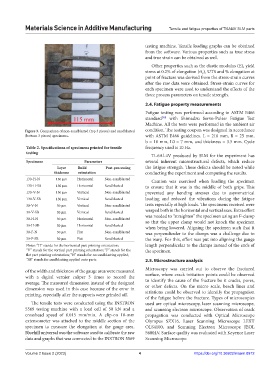
            Figure 3. Comparison of non-sandblasted (top 3 pieces) and sandblasted   condition. The testing coupon was designed in accordance
            (bottom 3 pieces) specimens.                       with ASTM E466 guidelines. L = 210 mm, B = 25 mm,
                                                               b = 10 mm, L0 = 7 mm, and thickness = 3.5 mm. Cycle
            Table 2. Specifications of specimens printed for tensile   frequency used is 10 Hz.
            testing
                                                                 Ti-6Al-4V  produced by SLM for  the experiment has
            Specimens                Parameters                several inherent microstructural defects, which reduce
                         Layer    Build       Post‑processing  the fatigue strength. These defects should be noted while
                        thickness  orientation                 conducting the experiment and computing the results.
            130-H-N      130 μm   Horizontal  Non-sandblasted    Caution was exercised when loading the specimen
            130-H-SB     130 μm   Horizontal  Sandblasted      to ensure that it was in the middle of both grips. This
            130-V-N      130 μm   Vertical    Non-sandblasted  prevented any bending stresses due to asymmetrical
            130-V-SB     130 μm   Vertical    Sandblasted      loading  and  reduced  the  vibrations  during  the  fatigue
            30-V-N       30 μm    Vertical    Non-sandblasted  tests especially at high loads. The specimens received were
            30-V-SB      30 μm    Vertical    Sandblasted      warped both in the horizontal and vertical axes. Extra effort
            30-H-N       30 μm    Horizontal  Non-sandblasted  was needed to “straighten” the specimen using an F-clamp
                                                               so that the upper clamp would not knock the specimen
            30-H-SB      30 μm    Horizontal  Sandblasted      when being lowered. Aligning the specimen such that it
            30-F-N       30 μm    Flat        Non-sandblasted  was perpendicular to the clamps was a challenge due to
            30-F-SB      30 μm    Flat        Sandblasted      the warp. For this, effort was put into aligning the gauge
            Notes: “H” stands for the horizontal part printing orientation;   length perpendicular to the clamps instead of the ends of
            “V” stands for the vertical part printing orientation; “F” stands for the   the specimen.
            flat part printing orientation; “N” stands for no sandblasting applied;
            “SB” stands for sandblasting applied onto parts    2.5. Microstructure analysis

            of the width and thickness of the gauge area were measured   Microscopy was carried out to observe the fractured
            with  a  digital  vernier  caliper  3  times  to  record  the   surface, where crack initiation points could be observed
            average. The measured dimension instead of the designed   to identify the cause of the fracture be it cracks, pores,
            dimension was used in this case because of the error in   or other defects. On the micro scale, beach lines and
            printing, especially after the supports were grinded off.  striations could be observed to identify the propagation
                                                               of the fatigue before the fracture. Types of microscopies
              The tensile tests were conducted using the INSTRON   used are optical microscopy, laser scanning microscope,
            5569 testing machine with a load cell of 50 kN and a   and scanning electron microscope. Observation of crack
            crosshead speed of 0.015  mm/min. A  clip-on 10-mm   propagation was conducted with Optical Microscope
            extensometer was attached to the middle section of the   Olympus  SZX16,  Laser  Scanning  Microscope  LEXT
            specimen to measure the elongation at the gauge area.   OLS4100,  and  Scanning  Electron  Microscope  JEOL
            Bluehill universal was the software used to calibrate the raw   5600LV. Surface quality was evaluated with Keyence Laser
            data and graphs that was connected to the INSTRON 5569   Scanning Microscope.


            Volume 2 Issue 2 (2023)                         4                       https://doi.org/10.36922/msam.0912

