


Page 31 - MSAM-3-3
P. 31
Materials Science in Additive Manufacturing                           Defects in additively fabricated Al6061


                                                               Conflict of interest

                                                               Tuğrul Özel serves as the Editorial Board Member of the
                                                               journal, but did not in any way involve in the editorial and
                                                               peer-review process conducted for this paper, directly or
                                                               indirectly. Other authors declare they have no competing
                                                               interests.
                                                               Author contributions

                                                               Conceptualization: Sivaji Karna, Faik Derya Ince, Lang
                                                                  Yuan, Tuğrul Özel
                                                               Data curation: Sivaji Karna, Tianyu Zhang, Andrew J.
                                                                  Gross, Lang Yuan
                                                               Formal analysis: Sivaji Karna, Faik Derya Ince, Lang Yuan,
                                                                  Tuğrul Özel
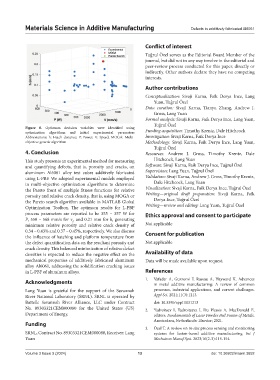
            Figure  8.  Optimum decision variables were identified using
            optimization  algorithms  and  initial  experimental  parameters   Funding acquisition: Timothy Krentz, Dale Hitchcock
            Abbreviations: h: Hatch distance; P: Power; V: Speed; MOGA: Multi-  Investigation: Sivaji Karna, Faik Derya Ince
            objective genetic algorithm                        Methodology: Sivaji Karna, Faik Derya Ince, Lang Yuan,
                                                                  Tuğrul Özel
            4. Conclusion                                      Resources: Andrew J. Gross, Timothy Krentz, Dale
            This study presents an experimental method for measuring   Hitchcock, Lang Yuan
            and quantifying defects, that is, porosity and cracks, on   Software: Sivaji Karna, Faik Derya Ince, Tuğrul Özel
            aluminum Al6061 alloy test cubes additively fabricated   Supervision: Lang Yuan, Tuğrul Özel
            using L-PBF. We adopted experimental models employed   Validation: Sivaji Karna, Andrew J. Gross, Timothy Krentz,
            in multi-objective optimization algorithms to determine   Dale Hitchcock, Lang Yuan
            the Pareto front of multiple fitness functions for relative   Visualization: Sivaji Karna, Faik Derya Ince, Tuğrul Özel
            porosity and relative crack density, that is, using MOGA or   Writing—original draft preparation: Sivaji Karna, Faik
            the Pareto search algorithm available in MATLAB Global   Derya Ince, Tuğrul Özel
            Optimization  Toolbox.  The optimum  results  for L-PBF   Writing—review and editing: Lang Yuan, Tuğrul Özel
            process  parameters  are reported to  be  355 –  357  W for   Ethics approval and consent to participate
            P, 550 – 568 mm/s for v , and 0.21 mm for h, generating
                                s
            minimum relative porosity and relative crack density of   Not applicable
            0.34 – 0.43% and 0.37 – 0.45%, respectively. We also discuss   Consent for publication
            the influence of hatching and platform temperature from
            the defect quantification data on the resultant porosity and   Not applicable
            crack density. This balanced minimization of relative defect
            densities is expected to reduce the negative effect on the   Availability of data
            mechanical  properties  of  additively  fabricated  aluminum   Data will be made available upon request.
            alloy Al6061, addressing the solidification cracking issues
            in L-PBF of aluminum alloys.                       References
                                                               1.   Vafadar A, Guzzomi F, Rassau A, Hayward K. Advances
            Acknowledgments                                       in metal additive manufacturing: A  review of common
            Lang Yuan is grateful for the support of the Savannah   processes, industrial applications, and current challenges.
            River National Laboratory (SRNL). SRNL is operated by   Appl Sci. 2021;11(3):1213.
            Battelle Savannah River Alliance, LLC under Contract      doi: 10.3390/app11031213
            No.  89303321CEM000080 for the United States (US)   2.   Yadroitsev I, Yadroitsava I, Du Plessis A, MacDonald E,
            Department of Energy.                                 editors. Fundamentals of Laser Powder Bed Fusion of Metals.
                                                                  Amsterdam, Netherlands: Elsevier; 2021.
            Funding
                                                               3.   Özel T. A review on in-situ process sensing and monitoring
            SRNL, Contract No. 89303321CEM000080, Receiver: Lang   systems for fusion-based additive manufacturing.  Int J
            Yuan                                                  Mechatron Manuf Syst. 2023;16(2-3):115-154.


            Volume 3 Issue 3 (2024)                         13                             doi: 10.36922/msam.3652

