


Page 29 - MSAM-3-3
P. 29
Materials Science in Additive Manufacturing                           Defects in additively fabricated Al6061


            Table 5. Defect density model approximations
            Model                 Porosity density, ϕ                            Crack density, ε
                                               rel                                          rel
                      Estimate      P          SE         t         Estimate       P          SE         t
            β 0        40.332      0.0003     10.166     3.9672      −5.199       0.2487     4.4428    −1.1702
            β         −0.17705     0.0372     0.0822    −2.1537    −0.0070975     0.8444    0.035926   −0.19756
             1
            β         0.020915     0.0506    0.010385    2.0139    0.0028734      0.5302   0.0045385   0.63312
             2
            β          −254.74   1.5588×10 6  45.423    −5.6082      120.74     3.3012×10 7  19.85     6.0826
             3
            β 12     −7.7404×10 5  0.0228     3.27×10 5  −2.3649   4.6101×10 5    0.0025    1.43×10 5  −3.2231
            β 13       0.17404     0.3271      0.175    0.99182     −0.52365    2.8762×10 8  0.076683  −6.8288
            β         0.012972     0.6537    0.028703   0.45193     0.088935    1.2296×10 8  0.012543  7.0902
             23
            β         0.00034234   0.034     0.00015611  2.193     0.00014449     0.0403    6.82×10 5   2.118
             11
            β         1.8017×10 6  0.1964     1.37×10 6  1.3132    3.0166×10 6  1.0132×10 5  6.00×10 7  5.0316
             22
            β          495.15      0.0014      144.4     3.4291     −5.0742       0.9363     63.102   −0.080412
             33
            Note: ϕ : RMSE=1.67, R =0.61, DOF=41; ε : RMSE=0.73, R =0.84, DOF=41.
                            2
                                                   2
                                        rel
                 rel
            Abbreviations: SE: Standard error; RMSE: Root mean square error; DOF: Degree of freedom.
            Table 6. Optimum values of decision variables based on each optimization algorithm
            Optimization algorithm             P (W)       v  (mm/s)     h (mm)       Porosity (%)    Crack (%)
                                                           s
            Multi-objective genetic algorithm (MOGA)  357    568          0.21           0.43           0.45
            Pareto search                       355          550          0.21           0.34           0.37

                         A                                   B


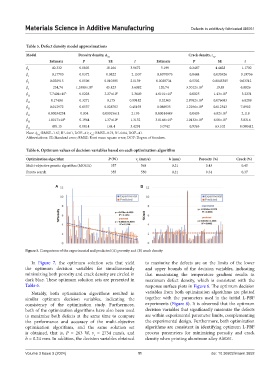
            Figure 5. Comparison of the experimental and predicted (A) porosity and (B) crack density

              In  Figure  7, the optimum solution sets that yield   to maximize the defects are on the limits of the lower
            the optimum decision variables for simultaneously   and upper bounds of the decision variables, indicating
            minimizing both porosity and crack density are circled in   that maximizing the temperature gradient results in
            dark blue. These optimum solution sets are presented in   maximum defect density, which is consistent with the
            Table 6.                                           response surface plots in Figure 6. The optimum decision
              Notably, both optimization algorithms resulted in   variables from both optimization algorithms are plotted
            similar optimum decision variables, indicating the   together with the parameters used in the initial L-PBF
            consistency of the optimization study. Furthermore,   experiments (Figure 8). It is observed that the optimum
            both of the optimization algorithms have also been used   decision variables that significantly minimize the defects
            to maximize both defects at the same time to compare   are within experimental parameter limits, complementing
            the performance and accuracy of the multi-objective   the experimental design. Furthermore, both optimization
            optimization algorithms,  and the  same  solution set   algorithms are consistent in identifying optimum L-PBF
            is obtained, that is,  P = 263 W,  v  = 2734  mm/s, and   process parameters for minimizing porosity and crack
                                         s
            h = 0.24 mm. In addition, the decision variables obtained   density when printing aluminum alloy Al6061.

            Volume 3 Issue 3 (2024)                         11                             doi: 10.36922/msam.3652

