


Page 90 - MSAM-3-3
P. 90
Materials Science in Additive Manufacturing                     Wide-angle broadband MMA with CB-CIP/PLA


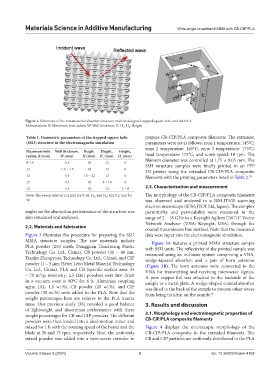
            Figure 1. Schematic of the metamaterial absorber structure and the designed stepped square hole unit within it
            Abbreviations: R: Maximum hole radius; W: Wall thickness; H, H , H : Height
                                                     1  2
            Table 1. Geometric parameters of the stepped square hole   prepare CB-CIP/PLA composite filaments. The extrusion
            (SSH) structure in the electromagnetic simulation  parameters were set as follows: zone 1 temperature: 145°C;
                                                               zone 2 temperature: 165°C; zone 3 temperature: 175°C;
            Maximum hole   Wall thickness,   Height   Height,   Height,
            radius, R (mm)  W (mm)  H (mm)  H  (mm)  H  (mm)   head temperature: 175°C; and screw speed: 18 rpm. The
                                             1      2          filament diameter was controlled at 1.75 ± 0.05 mm. The
            8–16             1.4      18      12      6        SSH structure samples were finally printed in an FFF
            12             1.0 – 1.6  18      12      6        3D printer using the extruded CB-CIP/PLA composite
            12               1.4     16 – 22  12      6        filaments with the printing parameters listed in Table 2. 38
            12               1.4      18     8 – 14   6
            12               1.4      18      12     2 – 8     2.3. Characterization and measurement
            Note: The sweep interval is 2 mm for R, H, H , and H ; and 0.2 mm for   The morphology of the CB-CIP/PLA composite filaments
                                         1
                                              2
            W.                                                 was observed and analyzed in a JSM-IT500 scanning
                                                               electron microscope (SEM; JEOL Ltd, Japan). The complex
            angles on the absorption performance of the structure was   permittivity and permeability were measured in the
            also simulated and analyzed.                       range of 2 – 18 GHz in a Keysight Agilent E5071C Vector
                                                               Network Analyzer (VNA; Keysight, USA) through the
            2.2. Materials and fabrication
                                                               coaxial transmission line method. Note that the measured
            Figure 2 illustrates the procedure for preparing the SSH   data were input into the electromagnetic simulation.
            MMA structure samples. The raw materials include     Figure  3A features a printed MMA structure sample
            PLA powder (250 mesh; Dongguan Huachuang Plastic   with SSH units. The reflectivity of the printed sample was
            Technology Co. Ltd., China), CB powder (30 – 40  nm;   measured using an in-house system comprising a VNA,
            Tianjin Zhengyuan Technology Co. Ltd., China), and CIP   wedge-tapered  absorber,  and  a  pair  of  horn  antennas
            powder (1 – 5 µm; Hebei Lebo Metal Material Technology   (Figure  3B). The horn antennas were connected to the
            Co. Ltd., China). PLA and CB (specific surface area: 55   VNA  for transmitting  and receiving  microwave  signals.
            – 70 m /g; resistivity: 2.5 Ωm) powders were first dried   A  pure copper foil was attached to the backside of the
                  2
            in a vacuum oven at 80°C  for 6  h. Aluminate coupling   sample as a metal plate. A wedge-shaped conical absorber
            agent  (AL;  1.5  wt.%),  CB  powder  (20  wt.%),  and  CIP   was fitted to the back of the sample to prevent other waves
            powder (30 wt.%) were added to the PLA. Note that the   from being incident on the sample. 36
            weight percentages here are relative to the PLA matrix
            mass. Our previous study [38] revealed a good balance   3. Results and discussion
            of  lightweight and  absorption  performance  with  these
            weight percentages for CB and CIP powders. The different   3.1. Morphology and electromagnetic properties of
            powders were then loaded into a dual-motion mixer and   CB-CIP/PLA composite filaments
            mixed for 1 h with the rotating speed of the barrel and the   Figure  4 displays the microscopic morphology of the
            blade at 28 and 17 rpm, respectively. Next, the uniformly   CB-CIP/PLA composite in the extruded filaments. The
            mixed powder was added into a twin-screw extruder to   CB and CIP particles are uniformly distributed in the PLA


            Volume 3 Issue 3 (2024)                         3                              doi: 10.36922/msam.4158

