


Page 91 - MSAM-3-3
P. 91
Materials Science in Additive Manufacturing Wide-angle broadband MMA with CB-CIP/PLA
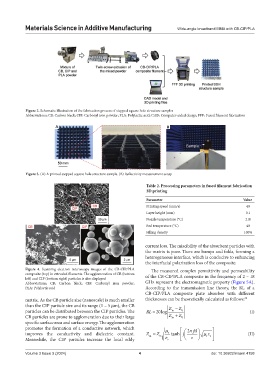
Figure 2. Schematic illustration of the fabrication process of stepped square hole structure samples
Abbreviations: CB: Carbon black; CIP: Carbonyl iron powder; PLA: Polylactic acid; CAD: Computer-aided design; FFF: Fused filament fabrication
A B
Figure 3. (A) A printed stepped square hole structure sample. (B) Reflectivity measurement setup
Table 2. Processing parameters in fused filament fabrication
3D printing
Parameter Value
Printing speed (mm/s) 40
Layer height (mm) 0.1
Nozzle temperature (°C) 210
Bed temperature (°C) 40
Filling density 100%
current loss. The miscibility of the absorbent particles with
the matrix is poor. There are bumps and folds, forming a
heterogeneous interface, which is conducive to enhancing
the interfacial polarization loss of the composite.
Figure 4. Scanning electron microscopy images of the CB-CIP/PLA The measured complex permittivity and permeability
composite (top) in extruded filaments. The agglomeration of CB (bottom of the CB-CIP/PLA composite in the frequency of 2 – 18
left) and CIP (bottom right) particles is also displayed
Abbreviations: CB: Carbon black; CIP: Carbonyl iron powder; GHz represent the electromagnetic property (Figure 5A).
PLA: Polylactic acid According to the transmission line theory, the RL of a
CB-CIP/PLA composite plate absorber with different
matrix. As the CB particle size (nanoscale) is much smaller thicknesses can be theoretically calculated as follows: 39
than the CIP particle size and its range (1 – 5 µm), the CB Z − Z
particles can be distributed between the CIP particles. The RL = 20log in 0 (I)
CB particles are prone to agglomeration due to their large Z + Z 0
in
specific surface area and surface energy. The agglomeration
promotes the formation of a conductive network, which µ 2π fd
improves the conductivity and dielectric constant. Z = Z 0 r tanh j µε (II)
rr
in
Meanwhile, the CIP particles increase the local eddy ε r c
Volume 3 Issue 3 (2024) 4 doi: 10.36922/msam.4158

