


Page 106 - MSAM-4-1
P. 106
Materials Science in Additive Manufacturing                  Topology optimization of an aluminum bicycle pedal
                                                                                    crank using laser powder bed fusion


            compliance  with industry  standards  and verify  long-term   comparative study assessed the roughness of two surfaces
            durability under cyclic loading conditions.        on the opposite sides of a complementary part. This analysis
                                                               examined the W-profile in both transversal and longitudinal
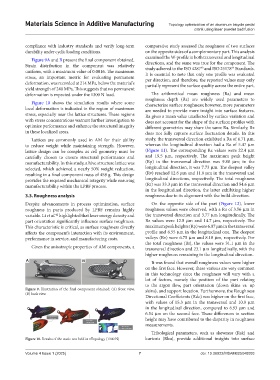
              Figure 9A and B present the final component obtained.
            Strain distribution in the component was relatively   directions, and the same was true for the component. The
                                                               study adhered to the ISO 4287  and ISO 25178  Standards.
                                                                                      43
                                                                                                    44
            uniform, with a maximum value of 0.0016. The maximum   It is essential to note that only one profile was evaluated
            stress,  an important metric for  evaluating permanent   per direction, and therefore, the reported values may only
            deformation, was recorded at 214 MPa, below the material’s   partially represent the surface quality across the entire part.
            yield strength of 240 MPa. This suggests that no permanent
            deformation is expected under the 1300 N load.       The arithmetical mean roughness (Ra) and mean
                                                               roughness  depth  (Rz)  are  widely  used  parameters  to
              Figure  10 shows the simulation results where some   characterize surface roughness; however, more parameters
            local deformation is indicated in the region of maximum   are needed to provide more insight into surface features.
            stress, especially near the lattice structures. These regions   Ra gives a mean value unaffected by surface variation and
            with stress concentrations warrant further investigation to   does not account for the shape of the surface; profiles with
            optimize performance and enhance the structural integrity   different geometries may share the same Ra. Similarly, Rz
            in these localized areas.                          does not fully capture surface fluctuation details. In this
              Lattices are commonly used in AM for their ability   study, the transversal direction exhibited a Ra of 6.71 µm,
            to reduce weight while maintaining strength. However,   whereas the longitudinal direction had a Ra of 5.47 µm
            lattice design can be complex as cell geometry must be   (Figure 11). The corresponding Rz values were 22.4 µm
            carefully chosen to ensure structural performance and   and  19.5  µm,  respectively.  The  maximum  peak  height
            manufacturability. In this study, a hive structure lattice was   (Rp) in the transversal direction was 9.88  µm; in the
            selected, which achieved a nearly 50% weight reduction,   longitudinal direction, it was 7.73 µm. The deepest valley
            resulting in a final component mass of 458 g. This design   (Rv) reached 12.6 µm and 11.8 µm in the transversal and
            provides the required mechanical integrity while ensuring   longitudinal directions, respectively. The total roughness
            manufacturability within the LPBF process.         (Rt) was 33.3 µm in the transversal direction and 54.6 µm
                                                               in the longitudinal direction, the latter exhibiting higher
            3.3. Roughness analysis                            roughness due to its alignment with the build direction.
            Despite advancements in process optimization, surface   On the opposite side of the part (Figure  12), lower
            roughness in parts produced by LPBF remains highly   roughness values were observed, with a Ra of 3.56 µm in
            variable. Li et al.  highlighted that laser energy density and   the transversal direction and 3.77 µm longitudinally. The
                         42
            part orientation significantly influence surface roughness.   Rz values were 12.8  µm and 14.7  µm, respectively. The
            This characteristic is critical, as surface roughness directly   maximum peak heights (Rp) were 6.07 µm in the transversal
            affects the component’s interaction with its environment,   profile and 6.55 µm in the longitudinal one. The deepest
            performance in service, and manufacturing costs.   valleys (Rv) were 6.75 µm and 8.10 µm, respectively. For
                                                               the total roughness (Rt), the values were 31.1 µm in the
              Given the anisotropic properties of AM components, a   transversal direction and 23.1 µm longitudinally, with the
                                                               higher roughness remaining in the longitudinal direction.
            A                       B                            It was found that overall roughness values were higher
                                                               on the first face. However, these various are very common
                                                               in this  technology since  the roughness  will  vary with a
                                                               lot of factors, namely the position of the part relating
                                                               to  the  argon  flow,  part  orientation  (down  skins  vs.  up
            Figure 9. Illustration of the final component obtained: (A) front view,   skins), and support location. Furthermore, the Roughness
            (B) back view
                                                               Directional Coefficients (Rdc) was higher on the first face,
                                                               with values of 15.3  µm in  the transversal and 10.9  µm
                                                               in the longitudinal direction, compared to 6.93  µm and
                                                               6.54 µm on the second face. These differences in section
                                                               height may have contributed to the disparity in roughness
                                                               measurements.
                                                                 Tribological parameters, such as skewness (Rsk) and
            Figure 10. Results of the static test held in nTopology (1300 N)  kurtosis (Rku), provide additional insights into surface


            Volume 4 Issue 1 (2025)                         7                         doi: 10.36922/MSAM025040003

