


Page 97 - OR-1-1
P. 97
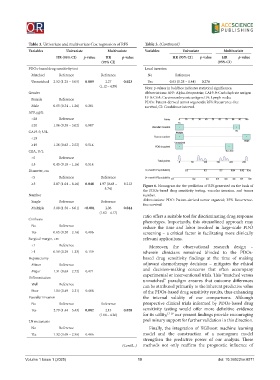
Table 3. Univariate and multivariate Cox regression of RFS  Table 3. (Continued)
             Variables       Univariate        Multivariate    Variables       Univariate       Multivariate
                         HR (95% CI)  p‑value  HR    p‑value              HR (95% CI)  p‑value  HR    p‑value
                                            (95% CI)                                          (95% CI)
             PDOs-based drug sensitivity test                  Local invasion
              Matched     Reference         Reference           No          Reference
              Unmatched  2.52 (1.25 – 5.05)  0.009  2.27    0.023  Yes   0.63 (0.28 – 1.44)  0.276
                                           (1.12 – 4.59)       Note: p-values in boldface indicates statistical significance.
             Gender                                            Abbreviations: AFP: Alpha-fetoprotein; CA19-9: Carbohydrate antigen
              Female      Reference                            19-9; CEA: Carcinoembryonic antigen; LN: Lymph node;
                                                               PDOs: Patient-derived tumor organoids; RFS: Recurrence-free
              Male      0.65 (0.34 – 1.26)  0.201              survival, CI: Confidence interval.
             AFP, μg/L
              <20         Reference
              ≥20       1.06 (0.38 – 3.02)  0.907
             CA19-9, U/L
              <19
              ≥19       1.26 (0.63 – 2.52)  0.514
             CEA, U/L
              <5          Reference
              ≥5        0.45 (0.18 – 1.16)  0.514
             Diameter, cm
              <5          Reference         Reference
              ≥5        2.87 (1.01 – 8.16)  0.048  1.97 (0.68 –   0.212  Figure 6. Nomogram for the prediction of RFS generated on the basis of
                                              5.74)           the PDOs-based drug sensitivity testing, vascular invasion, and tumor
             Number                                           number.
              Single      Reference         Reference         Abbreviations: PDO: Patient-derived tumor organoid; RFS: Recurrence-
                                                              free survival.
              Multiple  3.08 (1.58 – 6.01)  <0.001  2.06    0.044
                                           (1.02 – 4.17)
             Cirrhosis                                        ratio offers a suitable tool for discriminating drug response
                                                              phenotypes. Importantly, this streamlined approach may
              No          Reference                           reduce the time and labor involved in large-scale PDO
              Yes       0.65 (0.20 – 2.16)  0.486             screening – a critical factor in facilitating more clinically
             Surgical margin, cm                              relevant applications.
              <1          Reference                             Moreover, the observational research design –
              ≥1        0.59 (0.29 – 1.23)  0.159             wherein  clinicians remained blinded to  the  PDOs-
             Hepatectomy                                      based drug  sensitivity findings at  the  time of making
              Minor       Reference                           adjuvant chemotherapy decisions – mitigates the ethical
              Major     1.31 (0.63 – 2.72)  0.471             and decision-making concerns that often accompany
             Differentiation                                  experimental or interventional trials. This “matched versus
                                                              unmatched” paradigm ensures that outcome differences
              Well        Reference                           can be attributed primarily to the inherent predictive value
              Poor      1.04 (0.49 – 2.21)  0.406             of the PDOs-based drug sensitivity results, thus enhancing
             Vascular invasion                                the internal validity of our comparisons. Although
              No          Reference         Reference         prospective clinical trials informed by PDOs-based drug
              Yes       2.79 (1.44 – 5.43)  0.002  2.15    0.028  sensitivity testing would offer more definitive evidence
                                           (1.08 – 4.26)      for its utility, 17-19  our present findings provide encouraging
             LN metastasis                                    preliminary support for further validation in this direction.
              No          Reference                             Finally,  the  integration of  XGBoost machine learning
              Yes       1.32 (0.68 – 2.56)  0.406             model and the construction of a nomogram model
                                                              strengthen the predictive power of our analysis. These
                                                     (Cont’d...)  methods not only reaffirm the prognostic influence of


            Volume 1 Issue 1 (2025)                         10                                doi: 10.36922/or.8571

