


Page 109 - OR-1-2
P. 109
digestion.  During the culture process, the 3D culture   derived from multiple patients.  Organoid research aids
                                                                                        22
                    15
            system of organoids can achieve stable expansion, and the   in the analysis of drug sensitivity and provides a potential
                                            15
            passage is carried out every 1 – 2 weeks.  The composition   basis for optimizing personalized treatment strategies.  In
                                                                                                         23
            of the culture medium varies depending on the tissue   high-throughput drug screening, cancer organoids have
            origin.  Growth  factors  and  inhibitors  are  necessary  to   shown broad applicability, which can be applied to multiple
            facilitate the growth and differentiation of organoid tissue    tumor types. They are instrumental in target identification,
                                                          19
            (Figure  2). Patient-derived organoids (PDO) can retain   demonstrating great potential in discovering effective
            patient-specific morphological characteristics and cellular   drugs against rare cancer types.  In terms of chemotherapy
                                                                                       23
            structure, and their histological characteristics resemble   research, cancer organoids provide a more accurate
            the microscopic characteristics of patient tissues and   evaluation of the direct impact of chemotherapy on cancer
            tumor subtypes.  Furthermore, depending on the degree   cells.   This  property provides  the  basis  for  improving
                          21
                                                                  20
            of necrosis and viability of the original tumor tissue, the   existing chemotherapy regimens and designing new drugs.
            development rate and volume size of different organoids   In addition, in the field of immunotherapy, organoid models
            present considerable variations.  This characteristic   help reveal potential mechanisms for complex interactions
                                        21
            suggests that cancer organoids can accurately represent   between tumors and immune cells.  For example, organoid
                                                                                         24
            the original tumor’s heterogeneity, offering a valuable   models can be applied to evaluate tumor responses to
            platform for researching the biological characteristics and   immune checkpoint blockade (ICB) therapy, yielding
            pharmacological responses of tumors unique to individual   important insights for improving immunotherapy.
                                                                                                            25
            patients. Through cancer organoid culture technology,   At the same time, organoid immunoassay provides an
            researchers can explore the biological mechanisms of   experimental platform for the development of combination
            cancer more deeply while providing a reliable experimental   treatment strategies for multiple ICB therapies. It provides
            basis for preclinical drug screening and the development of   a scientific basis for the joint application of ICB with
            personalized treatment options. 21                targeted therapies, including MEK or BRAF inhibitors.
                                                                                                            25
               With the development of cancer organoids development   In  terms  of  genomic  screening,  3D  organoid  culture
            technology, cancer organoids are gradually being used   provides a more accurate representation of oncogenes
            in various cancer fields (Figure  3). Cancer organoids   and tumor suppressor genes in genomic  screening than
                                                                                                26
            are  primarily  used  in  preclinical  drug  screening  and   traditional two-dimensional cell culture. 3D organoids
            personalized medicine to simulate patients’ initial drug   closely simulate the tumor xenograft environment,
            response.  At present, the most pertinent research direction   thereby more genuinely reflecting the complex biological
                    22
            is large-scale drug screening based on cancer organoids   characteristics of tumors.  This feature gives organoid
                                                                                   26


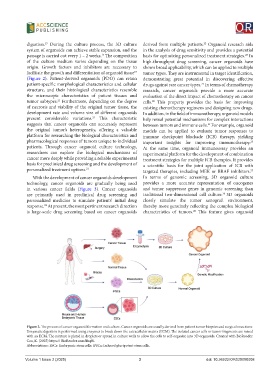
            Figure 2. The process of cancer organoid formation and culture. Cancer organoids are usually derived from patient tumor biopsies and surgical resections.
            Enzymatic digestion is performed using enzymes to break down the extracellular matrix (ECM). The isolated cancer cells or tumor fragments are mixed
            with an ECM. The mixture is plated in droplets or spread in culture wells to allow the cells to self-organize into 3D organoids. Created with BioRender.
            Cao, K. (2025) https:// BioRender.com/lfsqfti.
            Abbreviations: ESCs: Embryonic stem cells; iPSCs: Induced pluripotent stem cells.


            Volume 1 Issue 2 (2025)                         3                            doi: 10.36922/OR025050008

