


Page 110 - OR-1-2
P. 110
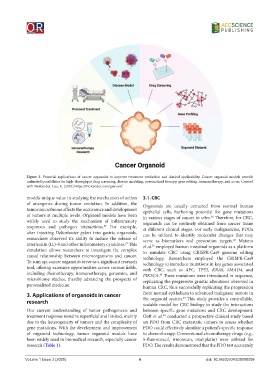
Figure  3. Potential applications of cancer organoids to improve treatment prediction and clinical applicability. Cancer organoid models provide
            unlimited possibilities for high-throughput drug screening, disease modeling, personalized therapy, gene editing, immunotherapy, and so on. Created
            with BioRender. Cao, K. (2025) https://BioRender.com/gv6xwxf.

            models unique value in studying the mechanism of action   3.1. CRC
            of oncogenes during tumor evolution. In addition, the   Organoids are usually extracted from normal human
            tumor microbiome affects the occurrence and development   epithelial cells, harboring potential for gene mutations
            of tumors at multiple levels. Organoid models have been   in various stages of cancer in vitro.  Therefore, for CRC,
                                                                                           28
            widely used to study the mechanism of inflammatory   organoids can be routinely obtained from cancer tissue
            responses and pathogen interactions.  For example,   at different clinical stages. For early malignancies, PDOs
                                             27
            after injecting  Helicobacter  pylori into gastric organoids,   can be utilized to identify molecular changes that may
            researchers observed its ability to induce the release of   serve as biomarkers and prevention targets.  Matano
                                                                                                    28
            interleukin (IL)-8 and other inflammatory cytokines.  This   et al.  employed human intestinal organoids as a platform
                                                      27
                                                                  29
            simulation allows researchers to investigate the complex   to simulate CRC using CRISPR-Cas9 genome editing
            causal relationship between microorganisms and cancer.   technology. Researchers employed  the CRISPR-Cas9
            To sum up, cancer organoids serve as a significant research   technology to introduce mutations in key genes associated
            tool, offering extensive opportunities across various fields,   with CRC, such as  APC,  TP53,  KRAS,  SMAD4, and
            including chemotherapy, immunotherapy, genomics, and   PIK3CA.  These mutations were introduced in sequence,
                                                                     29
            microbiome studies, thereby advancing the prospects of   replicating the progressive genetic alterations observed in
            personalized medicine.                            human CRC, thus successfully replicating the progression
            3. Applications of organoids in cancer            from normal epithelium to advanced malignant tumors in
                                                                               29
            research                                          the organoid system.  This study provides a controllable,
                                                              scalable model for CRC biology to study the interactions
            Our current understanding of tumor pathogenesis and   between specific gene mutations and CRC development.
            treatment response remains superficial and limited, mainly   Ooft et al.  conducted a prospective clinical study based
                                                                      30
            due to the heterogeneity of tumors and the complexity of   on PDO from CRC metastatic tumors to assess whether
            gene mutations. With the development and improvement   PDO could effectively simulate a patient’s specific response
            of organoid technology, tumor organoid models have   to chemotherapy. Conventional chemotherapy drugs (e.g.,
            been widely used in biomedical research, especially cancer   5-fluorouracil,  irinotecan,  oxaliplatin)  were  utilized  for
            research (Table 1).                               PDO. The results demonstrated that the PDO test accurately


            Volume 1 Issue 2 (2025)                         4                            doi: 10.36922/OR025050008

