


Page 53 - OR-1-2
P. 53
A                                               B


              C                                               D


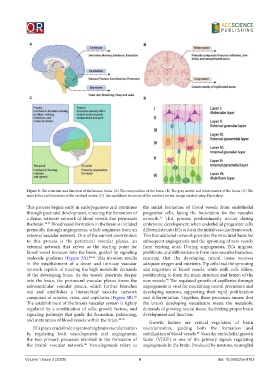
            Figure 2. The structure and function of the human brain. (A) The composition of the brain. (B) The gray matter and white matter of the brain. (C) The
            main lobes and functions of the cerebral cortex. (D) The multilayer structure of the cerebral cortex. Image created using Photoshop.

            This process begins early in embryogenesis and continues   the initial formation of blood vessels from endothelial
            through postnatal development, ensuring the formation of   progenitor cells, laying the foundation for the vascular
                                                                     47
            a dense, intricate network of blood vessels that permeates   network.  This process predominantly occurs during
            the brain. 38,39  Blood vessel formation in the brain is initiated   embryonic development, when endothelial progenitor cells
            prenatally through angiogenesis, which originates from an   differentiate into ECs to form the initial vascular framework.
            external vascular network. One of the earliest contributors   This foundational network provides the structural basis for
            to this process is the perineural vascular plexus, an   subsequent angiogenesis and the sprouting of new vessels
            external network that serves as the starting point for   from existing ones. During angiogenesis, ECs migrate,
            blood vessel invasion into the brain, guided by signaling   proliferate, and differentiate to form new vascular branches,
            molecule gradients (Figure  3A). 40,41  This invasion results   ensuring that the developing neural tissue receives
            in the establishment of a dense and intricate vascular   adequate oxygen and nutrients. Tip cells lead the sprouting
            network capable of meeting the high metabolic demands   and  migration  of blood vessels, while stalk cells follow,
            of  the developing brain.  As  the vessels penetrate  deeper   proliferating to form the main structure and lumen of the
                                                                        48
            into the brain, the perineural vascular plexus forms the   new vessels.  The regulated growth of capillaries through
            subventricular vascular plexus, which further branches   angiogenesis is vital for nourishing neural precursors and
            out and  establishes  a hierarchical  vascular network   developing  neurons,  supporting  their  rapid  proliferation
            composed of arteries, veins, and capillaries (Figure 3B).    and differentiation. Together, these processes ensure that
                                                          42
            The establishment of the brain’s vascular system is tightly   the brain’s developing vasculature meets the metabolic
            regulated by  a  combination  of  cells,  growth  factors, and   demands of growing neural tissue, facilitating proper brain
            signaling pathways that guide the formation, patterning,   development and function.
            and maturation of blood vessels within the brain. 43-45  Growth factors are critical regulators of brain
               ECs play a crucial role in promoting brain vascularization   vascularization, guiding both the formation and
            by regulating both vasculogenesis and angiogenesis,   stabilization of blood vessels.  Vascular endothelial growth
                                                                                     49
            the two primary processes involved in the formation of   factor (VEGF) is one of the primary signals regulating
            the  brain’s  vascular  network.   Vasculogenesis  refers  to   angiogenesis in the brain. Produced by neurons, neuroglial
                                     46

            Volume 1 Issue 2 (2025)                         4                                 doi: 10.36922/or.8162

