


Page 90 - OR-1-2
P. 90
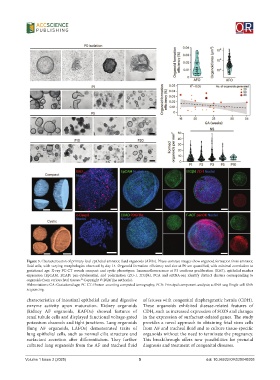
Figure 3. Characterization of primary fetal epithelial amniotic fluid organoids (AFOs). Phase-contrast images show organoid formation from amniotic
            fluid cells, with varying morphologies observed by day 14. Organoid formation efficiency and size at P0 are quantified, with minimal correlation to
            gestational age.  X-ray PC-CT  reveals compact and  cystic  phenotypes.  Immunofluorescence at  P3 confirms proliferation  (Ki67), epithelial  marker
            expression (EpCAM, ECAD, pan-cytokeratin), and polarization (ZO-1, ITGβ4). PCA and scRNA-seq identify distinct clusters corresponding to
            organoids from various fetal tissues.  Copyright © 2024 The author(s).
                                   21
            Abbreviations: GA: Gestational age; PC-CT: Photon-counting computed tomography; PCA: Principal component analysis; scRNA-seq: Single-cell RNA
            sequencing.
            characteristics of intestinal epithelial cells and digestive   of fetuses with congenital diaphragmatic hernia (CDH).
            enzyme activity upon maturation. Kidney organoids   These organoids exhibited disease-related features of
            (kidney AF  organoids,  KAFOs)  showed features of   CDH, such as increased expression of SOX9 and changes
            renal tubule cells and displayed functional voltage-gated   in the expression of surfactant-related genes. The study
            potassium channels and tight junctions. Lung organoids   provides a novel approach to obtaining fetal stem cells
            (lung AF organoids, LAFOs) demonstrated traits of   from AF and tracheal fluid and to culture tissue-specific
            lung epithelial cells, such as normal cilia structure and   organoids without the need to terminate the pregnancy.
            surfactant secretion after differentiation. They further   This breakthrough offers new possibilities for prenatal
            cultured lung organoids from the AF and tracheal fluid   diagnosis and treatment of congenital diseases.


            Volume 1 Issue 2 (2025)                         5                            doi: 10.36922/OR025040005

