


Page 92 - OR-1-2
P. 92
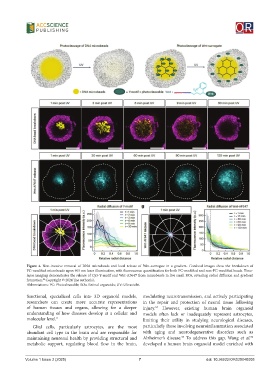
Figure  4.  Non-invasive removal of DNA microbeads and local release of Wnt-surrogate in a gradient. Confocal images show the breakdown of
            PC-modified microbeads upon 405 nm laser illumination, with fluorescence quantification for both PC-modified and non-PC-modified beads. Time-
            lapse imaging demonstrates the release of Cy3-Y-motif and Wnt-AF647 from microbeads in live small ROs, revealing radial diffusion and gradient
                   28
            formation.  Copyright © 2024 The author(s).
            Abbreviations: PC: Photocleavable; ROs: Retinal organoids; UV: Ultraviolet.
            functional, specialized cells into 3D organoid models,   modulating neurotransmission, and actively participating
            researchers can create more accurate representations   in the repair and protection of neural tissue following
            of human tissues and organs, allowing for a deeper   injury.  However, existing human brain organoid
                                                                   34
            understanding of how diseases develop at a cellular and   models  often  lack or  inadequately  represent  astrocytes,
            molecular level. 2                                limiting their utility in studying neurological diseases,
               Glial cells, particularly astrocytes, are the most   particularly those involving neuroinflammation associated
            abundant cell type in the brain and are responsible for   with aging and neurodegenerative disorders such as
                                                                                                            36
                                                                              35
            maintaining neuronal health by providing structural and   Alzheimer’s disease.  To address this gap, Wang  et al.
            metabolic  support,  regulating  blood  flow  in  the  brain,   developed a human brain organoid model enriched with

            Volume 1 Issue 2 (2025)                         7                            doi: 10.36922/OR025040005

