


Page 101 - OR-1-3
P. 101
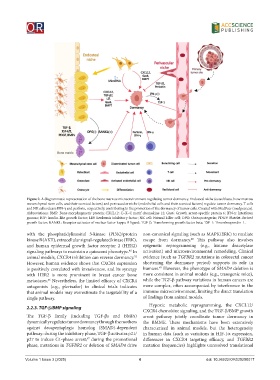
Figure 2. A diagrammatic representation of the bone marrow microenvironment regulating tumor dormancy. Endosteal niche (osteoblasts, bone marrow
            mesenchymal stem cells, and their secreted factors) and perivascular niche (endothelial cells and their secreted factors) regulate tumor dormancy. T cells
            and NK cells release IFN-γ and perforin, respectively, contributing to the promotion of the dormancy of tumor cells. Created with MedPeer (medpeer.cn).
            Abbreviations: BMP: Bone morphogenetic protein; CXCL12: C–X–C motif chemokine 12; Gas6: Growth arrest-specific protein 6; IFN-γ: Interferon
            gamma; IGF: Insulin-like growth factor; LIF: Leukemia inhibitory factor; NK cell: Natural killer cell; OPG: Osteoprotegerin; PDGF: Platelet-derived
            growth factor; RANKL: Receptor activator of nuclear factor kappa-B ligand; TGF-β: Transforming growth factor beta; TSP-1: Thrombospondin-1.

            with the phosphatidylinositol 3-kinase (PI3K)/protein   non-canonical signaling (such as MAPK/ERK) to mediate
            kinase B (AKT), extracellular signal-regulated kinase (ERK),   escape from dormancy.  This pathway also involves
                                                                                  48
            and  human  epidermal  growth  factor  receptor  2  (HER2)   epigenetic reprogramming (e.g., histone deacetylase
            signaling pathways to maintain a quiescent phenotype.  In   activation) and microenvironmental remodeling. Clinical
                                                        45
            animal models, CXCR4 inhibition can reverse dormancy.    evidence (such as TGFBR2 mutations in colorectal cancer
                                                          32
            However, human evidence shows that CXCR4 expression   shortening the dormancy period) supports its role in
                                                                     48
            is positively correlated with invasiveness, and its synergy   humans.  However, the phenotype of SMAD4 deletion is
            with HER2 is more prominent in breast cancer bone   more consistent in animal models (e.g., transgenic mice),
            metastases.  Nevertheless, the limited efficacy of CXCR4   while the TGF-β pathway variations in human cancers are
                     46
            antagonists (e.g., plerixafor) in clinical trials indicates   more complex, often accompanied by interference in the
            that animal models may overestimate the targetability of a   immune microenvironment, limiting the direct translation
            single pathway.                                   of findings from animal models.
                                                                Hypoxic metabolic reprogramming, the CXCL12/
            2.2.3. TGF-β/BMP signaling
                                                              CXCR4 chemokine signaling, and the TGF-β/BMP growth
            The TGF-β family  (including TGF-βs and BMPs)     arrest  pathway  jointly  coordinate  tumor  dormancy  in
            dynamically regulates tumor dormancy through the mothers   the BMME. These mechanisms have been extensively
            against decapentaplegic homolog (SMAD)-dependent   characterized in animal models, but the heterogeneity
            pathway: during the inhibitory phase, TGF-β activates p21/  in human data (such as variations in HIF-1α expression,
            p27 to induce G1-phase arrest;  during the promotional   differences in CXCR4 targeting efficacy, and  TGFBR2
                                      47
            phase, mutations in TGFBR2 or deletion of SMAD4 drive   mutation frequencies) highlights unresolved translational


            Volume 1 Issue 3 (2025)                         4                            doi: 10.36922/OR025200017

