


Page 103 - OR-1-3
P. 103
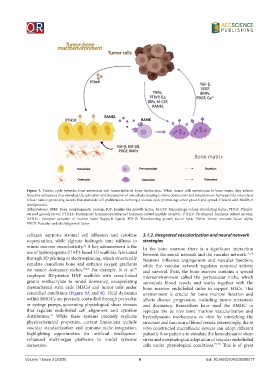
Figure 3. Vicious cycle between bone metastasis and tumor-induced bone destruction. When tumor cells metastasize to bone tissue, they release
            bioactive substances that stimulate the activation and maturation of osteoclasts, leading to bone destruction and osteoporosis. Subsequently, osteoclasts
            release tumor-promoting factors that stimulate cell proliferation, forming a vicious cycle promoting tumor growth and spread. Created with MedPeer
            (medpeer.cn).
            Abbreviations: BMP: Bone morphogenetic protein; IGF: Insulin-like growth factor; M-CSF: Macrophage colony-stimulating factor; PDGF: Platelet-
            derived growth factor; PTH1R: Parathyroid hormone/parathyroid hormone-related peptide receptor; PTHrP: Parathyroid hormone-related protein;
            RANKL: Receptor activator of nuclear factor kappa-B ligand; TGF-β: Transforming growth factor beta; TNFα: Tumor necrosis factor alpha;
            VEGF: Vascular endothelial growth factor.

            collagen supports stromal cell adhesion and cytokine   3.1.2. Integrated vascularization and neural network
            sequestration, while alginate hydrogels tune stiffness to   strategies
            mimic marrow viscoelasticity.  A key advancement is the   In the bone marrow, there is a significant interaction
                                     66
            use of hydroxyapatite (HAP)-based 3D scaffolds, fabricated   between the neural network and the vascular network. 75,76
            through 3D printing or electrospinning, which structurally   Neurons influence angiogenesis and vascular function,
            simulate cancellous  bone and  enhance  oxygen  gradients   while the vascular network regulates neuronal activity
                                                          71
            for  tumor  dormancy  niches. 72,73   For  example,  Ji  et al.    and survival. First, the bone marrow contains a special
            employed 3D-printed HAP scaffolds with cross-linked   microenvironment called the perivascular niche, which
            gelatin methacrylate to model dormancy, encapsulating   surrounds blood vessels and works together with the
            mesenchymal stem cells (MSCs) and tumor cells under   bone marrow endothelial niche to support HSCs. This
            controlled conditions (Figure 4A and B). Fluid dynamics   environment is crucial for bone marrow function and
            within BMOCs are precisely controlled through peristaltic   affects disease progression, including tumor metastasis
            or syringe pumps, generating physiological shear stresses   and dormancy. Researchers have used the BMOC to
            that regulate endothelial cell alignment and cytokine   replicate the  in vivo bone marrow vascularization and
            distribution.  While these systems precisely replicate   hydrodynamic mechanisms  in vitro by mimicking the
                      74
            physicochemical properties, current limitations include   structure and function of blood vessels. Interestingly, the in
            vascular  standardization  and  immune  niche  integration,   vitro constructed microfluidic devices can adopt different
            highlighting opportunities for artificial intelligence-  pulsatile flow patterns to simulate the hemodynamic shear
            enhanced multi-organ platforms to model systemic   stress and morphological adaptation of vascular endothelial
            metastasis.                                       cells under physiological conditions. 77-79  This is of great


            Volume 1 Issue 3 (2025)                         6                            doi: 10.36922/OR025200017

