


Page 108 - OR-1-3
P. 108
A                                          B                C


             D


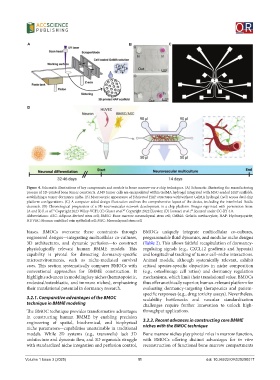
            Figure 4. Schematic illustrations of key components and models in bone marrow-on-a-chip techniques. (A) Schematic illustrating the manufacturing
            process of 3D-printed bone tumor constructs. A549 tumor cells are encapsulated within GelMA hydrogel integrated with MSC-seeded HAP scaffolds,
            establishing a tumor dormancy niche. (B) Macroscopic appearance of fabricated HAP structures with/without GelMA hydrogel (red) across dual chip
            platform configurations. (C) A computer-aided design illustration outlines the comprehensive layout of the device, including the interlinked fluidic
            channels. (D) Chronological progression of a 3D neurovascular network development in a chip platform. Images reprinted with permission from:
            (A and B) Ji et al.  Copyright 2023 Wiley-VCH; (C) Glaser et al.  Copyright 2022 Elsevier; (D) Isosaari et al.,  licensed under CC-BY 4.0.
                                                                                  69
                       71
                                                     67
            Abbreviations: ASC: Adipose-derived stem cell; BMSC: Bone marrow mesenchymal stem cell; GelMA: Gelatin methacrylate; HAP: Hydroxyapatite;
            HUVEC: Human umbilical vein epithelial cell; MSC: Mesenchymal stem cell.
            biases. BMOCs overcome these constraints through   BMOCs uniquely integrate multicellular co-cultures,
            engineered designs—integrating multicellular co-cultures,   programmable fluid dynamics, and modular niche designs
            3D architectures, and dynamic perfusion—to construct   (Table 2). This allows faithful recapitulation of dormancy-
            physiologically relevant human BMME models. This   regulating signals (e.g., CXCL12 gradients and hypoxia)
            capability is pivotal for dissecting dormancy-specific   and longitudinal tracking of tumor cell–niche interactions.
            microenvironments, such as niche-mediated survival   Animal models, although systemically relevant, exhibit
            cues. This section systematically compares BMOCs with   critical species-specific disparities in niche composition
            conventional approaches for BMME construction. It   (e.g., osteolineage cell ratios) and dormancy regulation
            highlights advances in modeling key niches (hematopoietic,   mechanisms, which limit their translational value. BMOCs
            endosteal/osteoblastic, and immune niches), emphasizing   thus offer an ethically superior, human-relevant platform for
            their translational potential in dormancy research.  evaluating dormancy-targeting therapeutics and patient-
                                                              specific responses (e.g., drug toxicity assays). Nevertheless,
            3.2.1. Comparative advantages of the BMOC         scalability bottlenecks and vascular standardization
            technique in BMME modeling                        challenges require further innovation to unlock high-
            The BMOC technique provides transformative advantages   throughput applications.
            in  constructing human  BMME  by enabling precision
            engineering of spatial, biochemical, and biophysical   3.2.2. Recent advances in constructing core BMME
            niche parameters—capabilities unattainable in traditional   niches with the BMOC technique
            models. While 2D systems (e.g., transwells) lack 3D   Bone marrow niches play pivotal roles in marrow function,
            architecture and dynamic flow, and 3D organoids struggle   with  BMOCs  offering  distinct  advantages  for  in  vitro
            with standardized niche integration and perfusion control,   reconstruction of functional bone marrow compartments


            Volume 1 Issue 3 (2025)                         11                           doi: 10.36922/OR025200017

