


Page 110 - OR-1-3
P. 110
A                                                       B


             C                                                                        D


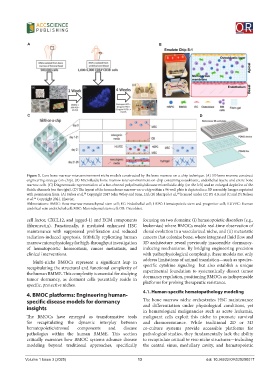
            Figure 5. Core bone marrow microenvironment niche models constructed by the bone marrow-on-a-chip technique. (A) 3D bone marrow construct
            engineering strategy (on-chip). (B) Microfluidic bone marrow microenvironment-on-chip containing osteoblastic, endothelial layers, and entire bone
            marrow cells. (C) Diagrammatic representation of a five-channel polydimethylsiloxane microfluidic chip (on the left) and an enlarged depiction of the
            fluidic channels (on the right). (D) The layout of the human bone marrow-on-a-chip within a 96-well plate is depicted in a 3D assembly. Images reprinted
                                     58
            with permission from: (A) Sieber et al.  Copyright 2017 John Wiley and Sons, Ltd; (B) Sharipol et al.,  licensed under CC BY 4.0; and (C and D) Nelson
                                                                            68
            et al.  Copyright 2021, Elsevier.
               66
            Abbreviations: BMSC: Bone marrow mesenchymal stem cell; EC: Endothelial cell; HSPC: Hematopoietic stem and progenitor cell; HUVEC: Human
            umbilical vein endothelial cell; MSC: Mesenchymal stem cell; OB: Osteoblast.
            cell factor, CXCL12, and jagged-1) and ECM components   focusing on two domains: (i) hematopoietic disorders (e.g.,
            (fibronectin).  Functionally,  it  mediated  enhanced  HSC   leukemias) where BMOCs enable real-time observation of
            maintenance with suppressed proliferation and reduced   clonal evolution in a vascularized niche, and (ii) metastatic
            radiation-induced apoptosis, faithfully replicating human   cancers that colonize bone, where integrated fluid flow and
            marrow microphysiology for high-throughput investigation   3D architecture reveal previously inaccessible dormancy-
            of hematopoietic homeostasis, cancer metastasis, and   inducing mechanisms. By bridging engineering precision
            clinical interventions.                           with pathophysiological complexity, these models not only
                                                              address limitations of animal translation—such as species-
               Multi-niche BMOCs represent a significant leap in
            recapitulating the structural and functional complexity of   specific cytokine signaling—but also establish a unique
                                                              experimental foundation to systematically dissect tumor
            the human BMME. This complexity is essential for studying   dormancy regulation, positioning BMOCs as indispensable
            tumor dormancy, as dormant cells potentially reside in   platforms for probing therapeutic resistance.
            specific, protective niches.
                                                              4.1. Human-specific hematopathology modeling
            4. BMOC platforms: Engineering human-
            specific disease models for dormancy              The bone marrow niche orchestrates HSC maintenance
            insights                                          and differentiation under physiological conditions, yet
                                                              in hematological malignancies such as acute leukemia,
            The BMOCs have emerged as transformative tools    malignant cells exploit this niche to promote survival
            for recapitulating the dynamic interplay between   and chemoresistance. While traditional 2D or 3D
            hematopoietic/stromal  components  and    disease  co-culture systems provide accessible platforms for
            pathologies within the human BMME. This section   pathological studies, they fundamentally lack the ability
            critically examines how BMOC systems advance disease   to recapitulate critical in vivo niche structures—including
            modeling beyond traditional approaches, specifically   the central sinus, medullary cavity, and hematopoietic


            Volume 1 Issue 3 (2025)                         13                           doi: 10.36922/OR025200017

