


Page 109 - OR-1-3
P. 109
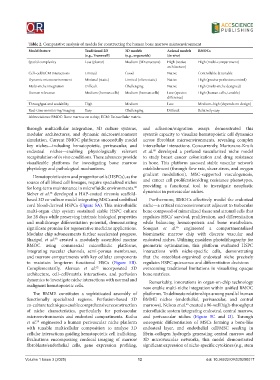
Table 2. Comparative analysis of models for constructing the human bone marrow microenvironment
             Model feature           Traditional 2D    3D models        Animal models   BMOCs
                                     (e.g., Transwell)  (e.g., organoids)  (in vivo)
             Spatial complexity      Low (planar)     Medium (3D structure)  High (native   High (multi-compartment)
                                                                        architecture)
             Cell–cell/ECM interactions  Limited      Good              Native       Controllable & tunable
             Dynamic microenvironment  Minimal (static)  Limited (often static)  Native  High (precise perfusion control)
             Multi-niche integration  Difficult       Challenging       Native       High (multi-niche designed)
             Human relevance         Medium (human cells)  Medium (human cells)  Low (species   High (human cells, tunable)
                                                                        difference)
             Throughput and scalability  High         Medium            Low          Medium–high (depends on design)
             Real-time monitoring/imaging  Easy       Challenging       Difficult    Relatively easy
             Abbreviations: BMOC: Bone marrow on a chip; ECM: Extracellular matrix.

            through multicellular integration, 3D culture systems,   and adhesion/migration assays demonstrated this
            modular architectures, and dynamic microenvironment   system’s capacity to visualize hematopoietic cell dynamics
            simulation. Current BMOC platforms successfully model   across fibroblast microenvironments, revealing complex
            key niches—including hematopoietic, perivascular, and   intercellular interactions. Concurrently, Marturano-Kruik
            endosteal niches—enabling physiologically relevant   et al.  developed a perfused vascularized niche model
                                                                  60
            recapitulation of in vivo conditions. These advances provide   to study breast cancer colonization and drug resistance
            visualizable platforms for investigating bone marrow   in bone. This platform assessed stable vascular network
            physiology and pathological mechanisms.           establishment (through flow rate, shear stress, and oxygen
               Hematopoietic stem and progenitor cells (HSPCs), as the   gradient modulation), MSC-supported vasculogenesis,
            source of all blood cell lineages, require specialized niches   and cancer cell proliferation/drug resistance phenotypes,
            for long-term maintenance in microfluidic environments.    providing a functional tool to investigate neoplastic
                                                          80
            Sieber  et  al.  developed a HAP-coated zirconia scaffold-  dynamics in perivascular niches.
                      58
            based 3D co-culture model integrating MSCs and umbilical   Furthermore,  BMOCs  effectively  model  the  endosteal
            cord blood-derived HSPCs (Figure 5A). This microfluidic   niche—a critical microenvironment adjacent to trabecular
            multi-organ chip system sustained stable HSPC culture   bone composed of mineralized tissue and stromal cells that
            for 28 days while preserving intrinsic biological properties   regulates HSCs’ survival, proliferation, and differentiation
            and multilineage differentiation potential, demonstrating   while balancing hematopoiesis and bone metabolism.
            significant promise for regenerative medicine applications.   Souquet  et al.  engineered a compartmentalized
                                                                            65
            Modular chip advancements further accelerated progress.   biomimetic marrow chip with discrete vascular and
                        68
            Sharipol  et al.  created a modularly assembled murine   endosteal niches. Utilizing maskless photolithography for
            BMOC using commercial microfluidic platforms,     geometric optimization, this platform evaluated HSPC
            integrating vascular channels, semi-porous membranes,   interactions with niche-specific  cells, demonstrating
            and marrow compartments with key cellular components   that the osteoblast-organized endosteal niche precisely
            to maintain long-term functional HSCs (Figure  5B).   regulates HSPC quiescence and differentiation decisions—
            Complementarily, Aleman  et al.  incorporated 3D   overcoming traditional limitations in visualizing opaque
                                          62
            architecture, cell–cell/matrix interactions, and perfusion   bone matrices.
            dynamics to investigate niche interactions with normal and   Remarkably, innovations in organ-on-chip technology
            malignant hematopoietic cells.                    now enable multi-niche integration within unified BMOC
               The BMME constitutes a sophisticated assembly of   platforms. To delineate relationships among parallel human
            functionally specialized regions. Perfusion-based 3D   BMME niches (endothelial, perivascular, and central
                                                                                66
            co-culture techniques enable comprehensive reconstruction   marrows), Nelson et al.  created a 96-well high-throughput
            of niche characteristics, particularly for perivascular   microfluidic system integrating endosteal, central marrow,
            microenvironments and endosteal compartments. Kotha   and  perivascular  niches  (Figure  5C  and  D).  Through
            et al.  engineered a human perivascular niche platform   osteogenic differentiation of MSCs  forming  a bone-like
                 59
            with tunable multicellular composition to analyze 3D   endosteal layer, and endothelial cell/MSC seeding in
            cellular interactions guiding hematopoietic cell trafficking.   fibrin-collagen hydrogels generating central marrow and
            Evaluations encompassing confocal imaging of marrow   3D microvascular networks, this model demonstrated
            fibroblasts/endothelial cells, gene expression profiling,   significant expression of niche-specific cytokines (e.g., stem


            Volume 1 Issue 3 (2025)                         12                           doi: 10.36922/OR025200017

