


Page 150 - OR-1-3
P. 150
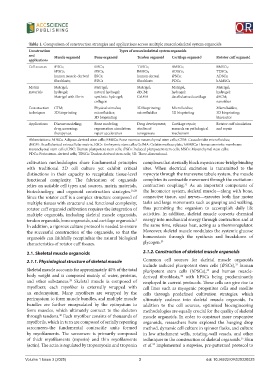
Table 1. Comparison of construction strategies and applications across multiple musculoskeletal system organoids
             Construction                           Types of musculoskeletal system organoids
             and        Muscle organoid  Bone organoid     Tendon organoid  Cartilage organoid  Rotator cuff organoid
             applications
             Cell sources  iPSCs;        MSCs;             TDSCs;         BMSCs;             BMSCs;
                        hPSCs;           iPSCs;            BMSCs;         ADSCs;             TDSCs;
                        human muscle-derived   ESCs;       human dermal   iPSCs;             ADSCs;
                        fibroblasts;     PDCs              fibroblasts    PDCs               hAMSCs
             Matrix     Matrigel;        Matrigel;         Matrigel;      Matrigel;          Matrigel;
             materials  hydrogel;        natural hydrogel;  dECM;         hydrogel;          hydrogel;
                        Matrigel with fibrin  synthetic hydrogel;  GelMA  decellularized cartilage  dECM;
                                         collagen                                            nanofiber
             Construction   CTM;         Physical stimulus;  3D bioprinting;  Microfluidics;  Microfluidics;
             techniques  3D bioprinting  microfluidics;    microfluidics  3D bioprinting     3D bioprinting;
                                         3D bioprinting                                      bioreactor
             Applications  Disease modeling;  Bone modeling;  Drug development;  Cartilage repair;  Rotator cuff simulation
                        drug screening;  regeneration simulation;  studies of   research on pathological   and repair
                        therapy test     repair acceleration   tenogenesis  mechanism
             Abbreviations: ADSCs: Adipose-derived stem cells; BMSCs: Bone marrow mesenchymal stem cells; CTM: Cascade tube microfluidics;
             dECM: Decellularized extracellular matrix; ESCs: Embryonic stem cells; GelMA: Gelatin methacrylate; hAMSCs: Human amniotic membrane
             mesenchymal stem cells; hPSC: Human pluripotent stem cells; iPSCs: Induced pluripotent stem cells; MSCs: Mesenchymal stem cells;
             PDCs: Periosteum-derived cells; TDSCs: Tendon-derived stem cells; 3D: Three-dimensional.
            cultivation methodologies share fundamental principles   complexes that sterically block myosin cross-bridge binding
            with traditional 2D cell culture yet exhibit critical   sites. When electrical excitation is transmitted to the
            distinctions in their capacity to recapitulate tissue-level   myocyte through the transverse tubule system, the muscle
            functional complexity. The fabrication of organoids   completes its contractile movement through the excitation-
                                                                                31
            relies on suitable cell types and sources, matrix materials,   contraction coupling.  As an important component of
            biotechnology,  and  organoid construction strategies. 16,28    the locomotor system, skeletal muscle—along with bone,
            Since the rotator cuff is a complex structure composed of   connective tissue, and nerves—executes both fine motor
            multiple tissues with structural and functional complexity,   tasks and large movements such as grasping and walking,
            rotator cuff organoid cultivation requires the integration of   thus permitting the organism to accomplish daily life
            multiple organoids, including skeletal muscle organoids,   activities. In addition, skeletal muscle converts chemical
            tendon organoids, bone organoids, and cartilage organoids.    energy into mechanical energy through contraction and at
                                                           2
            In addition, a rigorous culture protocol is needed to ensure   the same time, releases heat, acting as a thermoregulator.
            the successful construction of the organoids, so that the   Moreover, skeletal muscle modulates the systemic glucose
            organoids can faithfully recapitulate the natural biological   homeostasis through the  synthesis and  breakdown  of
            characteristics of rotator cuff tissues.          glycogen. 25
            2.1. Skeletal muscle organoids                    2.1.2. Construction of skeletal muscle organoids

            2.1.1. Physiological structure of skeletal muscle  Common cell sources for skeletal muscle organoids
                                                              include induced pluripotent stem cells (iPSCs),  human
                                                                                                     32
            Skeletal muscle accounts for approximately 40% of the total   pluripotent stem cells (hPSCs),  and human muscle-
                                                                                         33
            body weight and is composed mainly of water, proteins,   derived fibroblasts,  with hPSCs being predominantly
                                                                              34
            and  other  substances.   Skeletal  muscle  is  composed  of   employed in current protocols. These cells can give rise to
                               29
            myofibers; each  myofiber  is externally wrapped with   cell lines such as myogenic progenitor cells and satellite
            an endomysium. Many myofibers are wrapped by the   cells through predefined cultivation strategies, which
            perimysium to form muscle bundles, and multiple muscle   ultimately coalesce into skeletal muscle organoids. In
            bundles are further encapsulated by the epimysium to   addition to the cell sources, optimized bioengineering
            form muscles, which ultimately connect to the skeleton   methodologies are equally crucial for the quality of skeletal
            through tendons.  Each myofiber consists of thousands of   muscle organoids. In order to construct more responsive
                          30
            myofibrils, which in turn are composed of serially repeating   organoids, researchers have explored the hanging drop
            sarcomeres-the fundamental contractile units formed   method, dynamic cell culture in spinner flasks, and culture
            by myofilaments. The sarcomere is primarily composed   in  low  attachment  wells,  rotating-wall  vessels,  and  other
            of thick myofilaments (myosin) and thin myofilaments   techniques in the construction of skeletal organoids.  Shin
                                                                                                       35
            (actin). The actin is regulated by tropomyosin and troponin   et al.  implemented a stepwise, pre-patterned protocol to
                                                                  33

            Volume 1 Issue 3 (2025)                         3                            doi: 10.36922/OR025320025

