


Page 31 - OR-1-3
P. 31
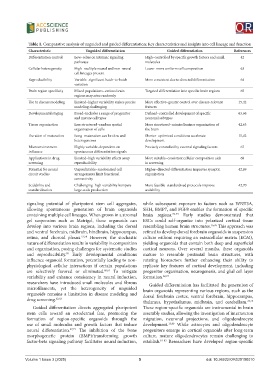
Table 1. Comparative analysis of unguided and guided differentiation: Key characteristics and insights into cell lineage and function
             Characteristic          Unguided differentiation           Guided differentiation       References
             Differentiation control  Low–relies on intrinsic signaling   High–controlled by specific growth factors and small   42
                                 pathways                      molecules
             Cellular heterogeneity  High–multiple neural and non-neural   Lower–more uniform cell composition  63
                                 cell lineages present
             Reproducibility     Variable–significant batch-to-batch   More consistent due to directed differentiation  64
                                 variation
             Brain region specificity  Mixed populations–various brain   Targeted differentiation into specific brain regions  65
                                 regions may arise randomly
             Use in disease modeling  Limited–higher variability makes precise   More effective–greater control over disease-relevant   15,42
                                 modeling challenging          features
             Developmental staging  Broad–includes a range of progenitor   Defined–controlled development of specific   63,66
                                 and mature cell types         neuronal subtypes
             Tissue organization  Less structured–random spatial   More structured–mimics laminar organization of   42,63
                                 organization of cells         the brain
             Duration of maturation  Long–maturation can be slow and   Shorter–optimized conditions accelerate   15,42
                                 heterogeneous                 development
             Microenvironment    Highly variable–dependent on   Precisely controlled by external signaling factors  67
             influence           spontaneous differentiation signals
             Applications in drug   Limited–high variability affects assay   More suitable–consistent cellular composition aids   68
             screening           reproducibility               in screening
             Potential for neural   Unpredictable–randomized cell   Higher–directed differentiation improves synaptic   42,69
             circuit studies     arrangements limit functional   organization
                                 connectivity
             Scalability and     Challenging–high variability hampers   More feasible–standardized protocols improve   42,70
             standardization     large-scale production        scalability

            signaling potential of pluripotent stem cell aggregates,   while subsequent exposure to factors such as WNT3A,
            allowing spontaneous generation of brain organoids   SHH, BMP7, and FGF8 enables the formation of specific
            containing multiple cell lineages. When grown in a stromal   brain regions. 72-74  Early studies demonstrated that
            gel suspension such as Matrigel, these organoids can   ESCs  could self-organize  into polarized  cortical  tissue
            develop into various brain regions, including the dorsal   resembling human brain structures. 75,76  This approach was
            and ventral forebrain, midbrain, hindbrain, hippocampus,   refined to develop dorsal forebrain organoids in suspension
            retina, and choroid plexus. 57,58  However, the stochastic   culture without requiring an extracellular matrix (ECM),
            nature of differentiation results in variability in composition   yielding organoids that contain both deep and superficial
            and organization, posing challenges for systematic studies   cortical neurons. Over several months, these organoids
            and reproducibility.  Early developmental conditions   mature to resemble postnatal brain structures, with
                             59
            influence organoid formation, potentially leading to non-  rotating bioreactors further enhancing their ability to
            physiological cellular interactions if certain populations   replicate key features of cortical development, including
            are  selectively  favored  or  eliminated. 60,61   To  mitigate   progenitor organization, neurogenesis, and glial cell layer
            variability and enhance consistency in neural induction,   formation. 62,77
            researchers have introduced small molecules and fibrous   Guided differentiation has facilitated the generation of
            microfilaments, yet the heterogeneity of unguided   brain organoids representing various regions, such as the
            organoids  remains  a  limitation  in  disease  modeling  and   dorsal forebrain cortex, ventral forebrain, hippocampus,
            drug screening. 62,63                             thalamus, hypothalamus, midbrain, and cerebellum. 78,79
               Guided differentiation directs aggregated pluripotent   These region-specific organoids are instrumental in brain
            stem cells toward an ectodermal fate, promoting the   assembly studies, allowing the investigation of interneuron
            formation of region-specific organoids through the   migration, neuronal projections, and oligodendrocyte
            use of small molecules and growth factors that induce   development. 15,80  While astrocytes and oligodendrocyte
            neural differentiation. 57,71  The inhibition of the bone   progenitors emerge in cortical organoids after long-term
            morphogenetic protein (BMP)/transforming growth   culture, mature oligodendrocytes remain challenging to
            factor-beta signaling pathway facilitates neural induction,   establish. 81-83  Researchers have developed region-specific


            Volume 1 Issue 3 (2025)                         5                            doi: 10.36922/OR025100010

