


Page 34 - OR-1-3
P. 34
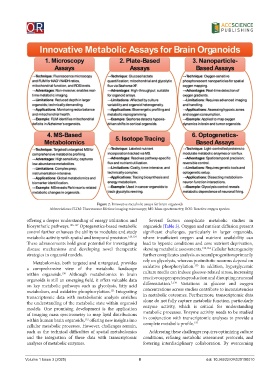
Figure 2. Innovative metabolic assays for brain organoids
                      Abbreviations: FLIM: Fluorescence lifetime imaging microscopy; MS: Mass spectrometry; ROS: Reactive oxygen species.

            offering a deeper understanding of energy utilization and   Several factors complicate metabolic studies in
            biosynthetic pathways. 125-127  Optogenetics-based metabolic   organoids (Table 3). Oxygen and nutrient diffusion present
            control further enhances the ability to modulate and study   significant challenges, particularly in larger organoids,
            metabolic activity with spatial and temporal precision. 128,129    where insufficient oxygen and nutrient availability can
            These advancements hold great potential for investigating   lead to hypoxic conditions and core nutrient deprivation,
            disease mechanisms and developing novel therapeutic   skewing metabolic assessments. 133,134  Cellular heterogeneity
            strategies in organoid models.                    further complicates analysis, as neural progenitors primarily
               Metabolomics, both targeted and untargeted, provides   rely on glycolysis, whereas postmitotic neurons depend on
                                                                                    135
            a comprehensive view of the metabolic landscape   oxidative phosphorylation.  In addition, hyperglycemic
            within organoids.  Although metabolomics in brain   culture media can induce glucose-related stress, increasing
                           130
            organoids is still an emerging field, it offers valuable data   reactive oxygen species production and disrupting neuronal
                                                                          7,136
            on  key metabolic  pathways  such  as glycolysis, fatty acid   differentiation.   Variations in glucose and oxygen
            metabolism, and oxidative phosphorylation.  Integrating   concentrations across studies contribute to inconsistencies
                                                131
            transcriptomic data with metabolomic analysis enriches   in metabolic outcomes. Furthermore, transcriptomic data
            the understanding of the metabolic state within organoid   alone do not fully capture metabolic function, particularly
            models.  One  promising  development  is the  application   enzyme  activity, which is critical  for  understanding
            of imaging mass spectrometry to map lipid distributions   metabolic processes. Enzyme activity needs to be studied
            within human brain organoids,  offering new insights into   in conjunction with transcriptomic analyses to provide a
                                     132
                                                                                    137
            cellular metabolic processes. However, challenges remain,   complete metabolic profile.
            such as the technical difficulties of spatial metabolomics   Addressing these challenges requires optimizing culture
            and the integration of these data with transcriptomic   conditions, refining metabolic assessment protocols, and
            analyses of metabolic enzymes.                    fostering interdisciplinary collaboration. By overcoming


            Volume 1 Issue 3 (2025)                         8                            doi: 10.36922/OR025100010

