


Page 33 - OR-1-3
P. 33
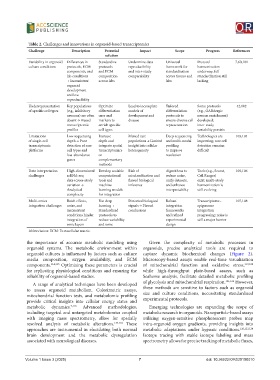
Table 2. Challenges and innovations in organoid-based transcriptomics
             Challenge         Description   Potential      Impact          Scope        Progress   References
                                              solution
             Variability in organoid  Differences in   Standardize   Undermine data   Universal   Protocol   7,60,101
             culture conditions  protocols, ECM   protocols   reproducibility   framework for   harmonization
                             components, and   and ECM   and inter-study   standardization   underway; full
                             lab conditions   composition   comparability  across tissues and   standardization still
                             → Inconsistent   across labs               labs         lacking
                             organoid
                             development
                             and low
                             reproducibility
             Underrepresentation   Key populations   Optimize   Lead to incomplete   Tailored   Some protocols   42,102
             of specific cell types  (e.g., inhibitory   differentiation   models of   differentiation   (e.g., GABAergic
                             neurons) are often  cues and   development and   protocols to   neuron enrichment)
                             absent → Biased   markers to   disease     ensure diverse cell  developed;
                             transcriptomic   enrich specific           representation  inter-study
                             profiles      cell types                                variability persists
             Limitations     Low sequencing   Increase   Missed rare    Deep sequencing   Technologies are   103,104
             of single-cell   depth → Poor   depth and   populations → Limited  and multi-modal   improving; rare cell
             transcriptomic   detection of rare   integrate spatial   insight into cellular   profiling   detection remains
             platforms       cell types and   transcriptomics   heterogeneity  to improve   difficult
                             low-abundance   or                         resolution
                             genes         complementary
                                           methods
             Data interpretation   High-dimensional  Develop scalable   Risk of   Algorithms to   Tools (e.g., Seurat,   105,106
             challenges      scRNA-seq     computational   misclassification and   reduce noise,   Cell Ranger)
                             data+cross-study   tools and   flawed biological   unify datasets,   exist; multi-study
                             variation →   machine      inference       and enhance   harmonization is
                             Analytical    learning models              interpretability  still evolving
                             complexity    for integration
             Multi-omics     Batch effects,   Use deep   Distorted biological   Robust   Transcriptome–  107,108
             integration challenges  noise, and   learning +   signals → Flawed   integration   epigenome
                             inconsistent   Standardized   conclusions  frameworks   integration
                             conditions hinder   protocols to           and refined   progressing; noise is
                             integration of   reduce variability        experimental   still a major barrier
                             omic layers   and noise                    design
             Abbreviation: ECM: Extracellular matrix.

            the importance of accurate metabolic modeling using   Given the complexity of metabolic processes in
            organoid  systems.  The  metabolic  environment  within   organoids, precise analytical tools are required to
            organoid cultures is influenced by factors such as culture   capture dynamic biochemical changes (Figure  2).
            media composition, oxygen availability, and ECM   Microscopy-based assays enable real-time visualization
            components. 114,115   Optimizing  these  parameters  is  crucial   of mitochondrial function and oxidative stress, 119,120
            for replicating physiological conditions and ensuring the   while high-throughput plate-based assays, such as
            reliability of organoid-based studies.            Seahorse analysis, facilitate detailed metabolic profiling
               A range of analytical techniques have been developed   of glycolysis and mitochondrial respiration. 121,122  However,
            to assess organoid metabolism. Colorimetric assays,   these methods are sensitive to factors such as organoid
            mitochondrial function tests, and metabolomic profiling   size and culture conditions, necessitating standardized
            provide critical insights into cellular energy states and   experimental protocols.
            metabolic  dynamics. 7,116  Advanced  methodologies,  Emerging technologies are expanding the scope of
            including targeted and untargeted metabolomics coupled   metabolic research in organoids. Nanoparticle-based assays
            with imaging mass spectrometry, allow for spatially   utilizing oxygen-sensitive phosphorescent probes map
            resolved analysis of metabolic alterations. 117,118  These   intra-organoid oxygen gradients, providing insights into
            approaches are instrumental in elucidating both normal   metabolic adaptations under hypoxic conditions. 120,123,124
            brain development and the metabolic dysregulation   Isotope tracing with stable isotope labeling and mass
            associated with neurological diseases.            spectrometry allows for precise tracking of metabolic fluxes,


            Volume 1 Issue 3 (2025)                         7                            doi: 10.36922/OR025100010

